
Why cleaning is part of production
The bowl, lid, scraper and blade set are direct food-contact surfaces. Moist, protein-rich and fatty residue is an ideal environment for microorganisms; hummus or sauce residue left for a few hours can shorten the shelf life of the next day's first batch.
Dried residue causes two more problems: it makes cleaning longer, and during cleaning it acts like an abrasive and dulls the blade. The easiest clean is the one done as soon as the batch is finished.
In businesses working with allergens such as sesame (tahini), hazelnuts and peanuts, milk (processed cheese) and mustard, cleaning is also what backs up the allergen declaration on the label. If the same machine processes more than one allergen, product changeovers need a procedure of their own.
Cleaning steps between batches and at the end of the day
Between batches of the same product a full strip-down is not needed: empty the bowl, remove product stuck to the wall with the scraper and rinse the bowl with lukewarm water. When the product changes, during a long break or at the end of the day, apply the full clean below.
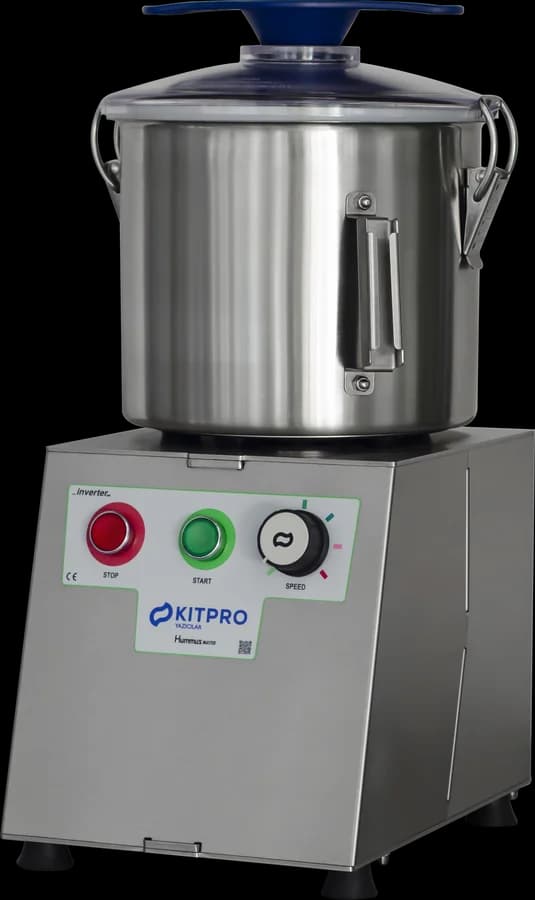
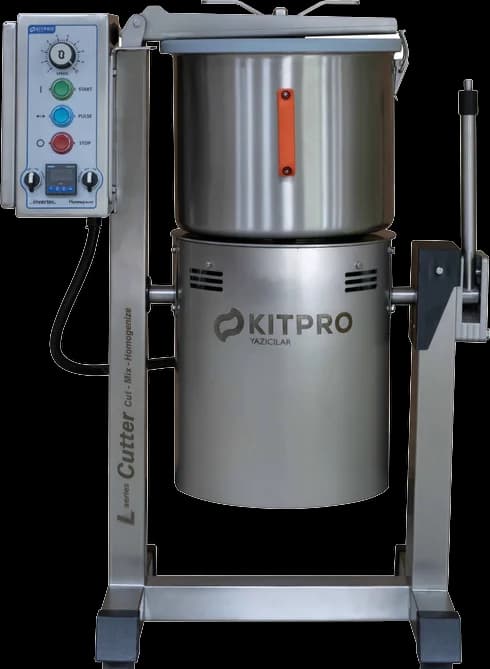
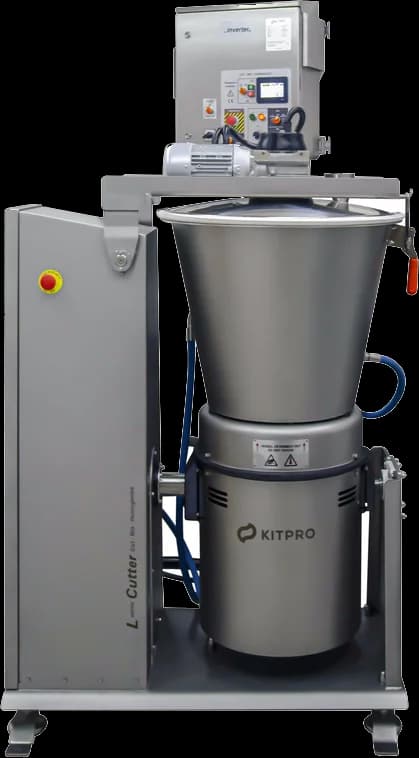
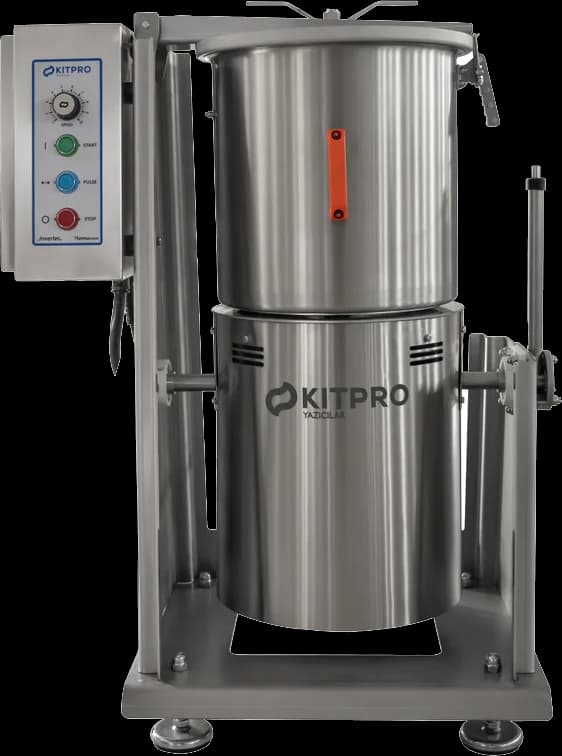
On vertical cutters the bowl is emptied by tilting or lifting it out, and the blade set comes off without tools, so a full clean takes much less time than on horizontal machines. Wear cut-resistant gloves when removing the blade set.
- Stop the machine, switch off the main isolator and wait for the blade to stop completely.
- Remove coarse residue with the scraper or a plastic spatula, then empty the bowl.
- Remove the blade set, the lid and the scraper.
- Pre-rinse with lukewarm water (about 40-50 °C): very hot water bakes protein onto the surface and makes cleaning harder.
- Wash with a food-safe detergent and a soft brush or sponge, paying particular attention to the blade hub, the shaft seat and the seal grooves.
- Rinse with clean water; if your procedure requires it, apply disinfectant and rinse again.
- Leave the parts to air-dry, keep the bowl open and reassemble the machine with dry parts.
- Wipe the motor housing and control panel with a damp cloth.
The right chemicals and protecting stainless steel
Choose chemicals by the type of soil. Fatty and protein-rich residue from tahini, hummus, cheese and meat dissolves with an alkaline detergent. Mineral deposits such as hard-water scale and milkstone do not; they need an acid cleaner used periodically.
AISI 304 stainless steel resists corrosion, but it is not invincible. Using chlorine products above the recommended dose or leaving them on the surface for long, or leaving salty brine or sauce residue overnight, can cause pitting corrosion. Steel wire brushes and steel wool leave iron particles on the surface, which rust and look like rust stains on the stainless steel.
| Suitable cleaner | Watch out for | |
|---|---|---|
| Fat and protein (tahini, hummus, cheese, meat) | Alkaline detergent | Pre-rinse with lukewarm, not hot, water |
| Scale, milkstone, mineral deposits | Acid cleaner (periodic) | Never mix with alkaline products; rinse in between |
| Sugary, sticky residue (dried fruit, chocolate) | Soak with lukewarm water and detergent | Do not use metal scrapers |
| Microbiological risk | Food-safe disinfectant | Follow concentration and contact time, then rinse |
Allergen changeovers and verifying the clean
When switching from an allergen-containing product to an allergen-free one, a rinse between batches is not enough: the machine is fully stripped down and cleaned. The production plan is part of cleaning too; a day scheduled from allergen-free to allergen-containing products reduces the number of risky changeovers.
Whether the clean worked is verified by measurement. Visual inspection comes first: no visible residue should remain. An ATP test shows the general cleanliness of a surface within minutes, and for critical allergen changeovers allergen-specific rapid surface tests are used. Recording the results is the proof of cleaning during audits.
- Schedule production from allergen-free to allergen-containing products.
- Verify critical changeovers with a surface test and record the result.
- Inspect seals and scraper rubbers regularly; a cracked seal creates a pocket that cannot be cleaned.
- Separate cleaning tools such as brushes and cloths by allergen zone.