
How a cutter mixer works
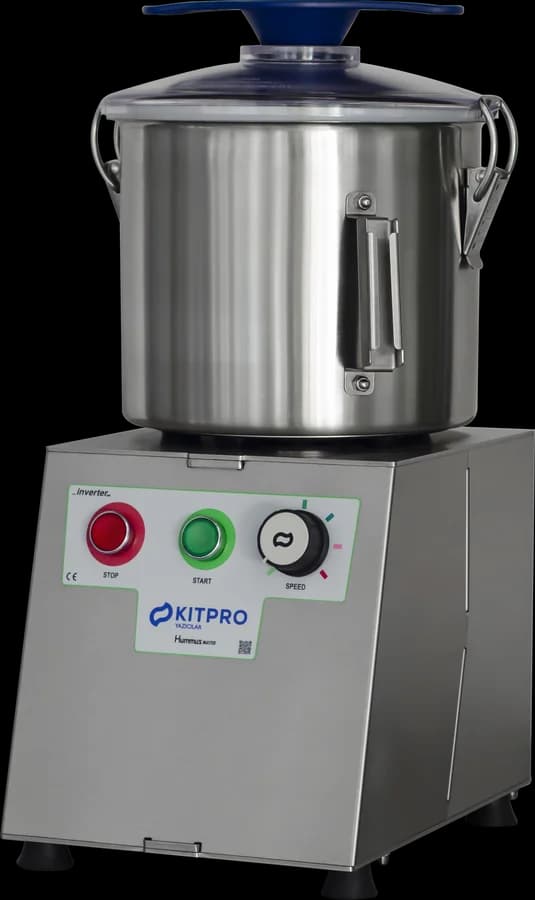
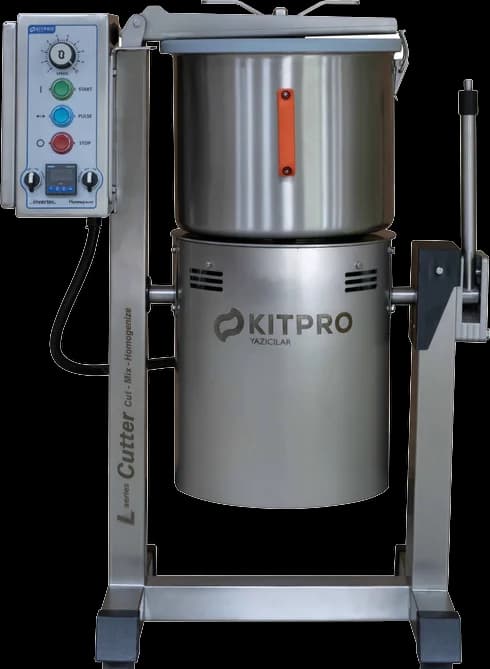
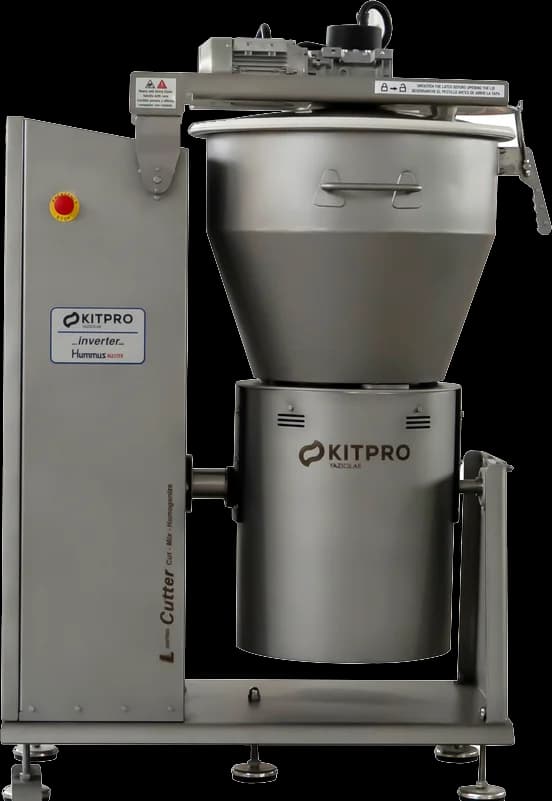
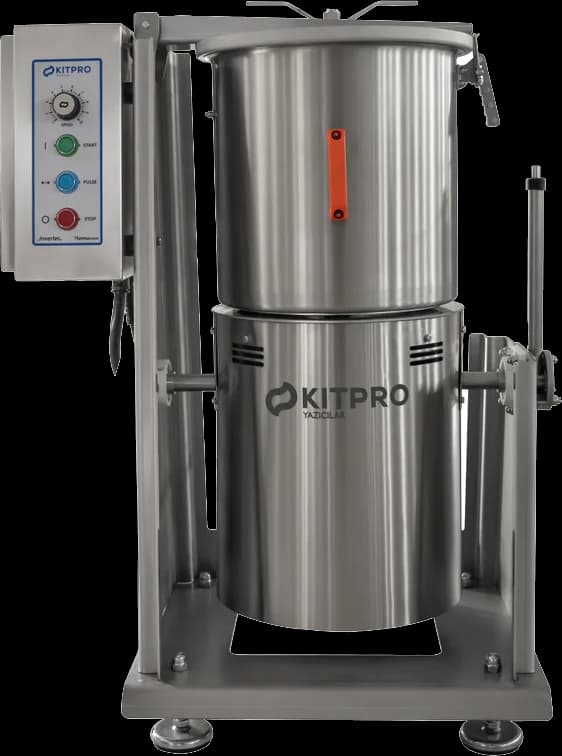
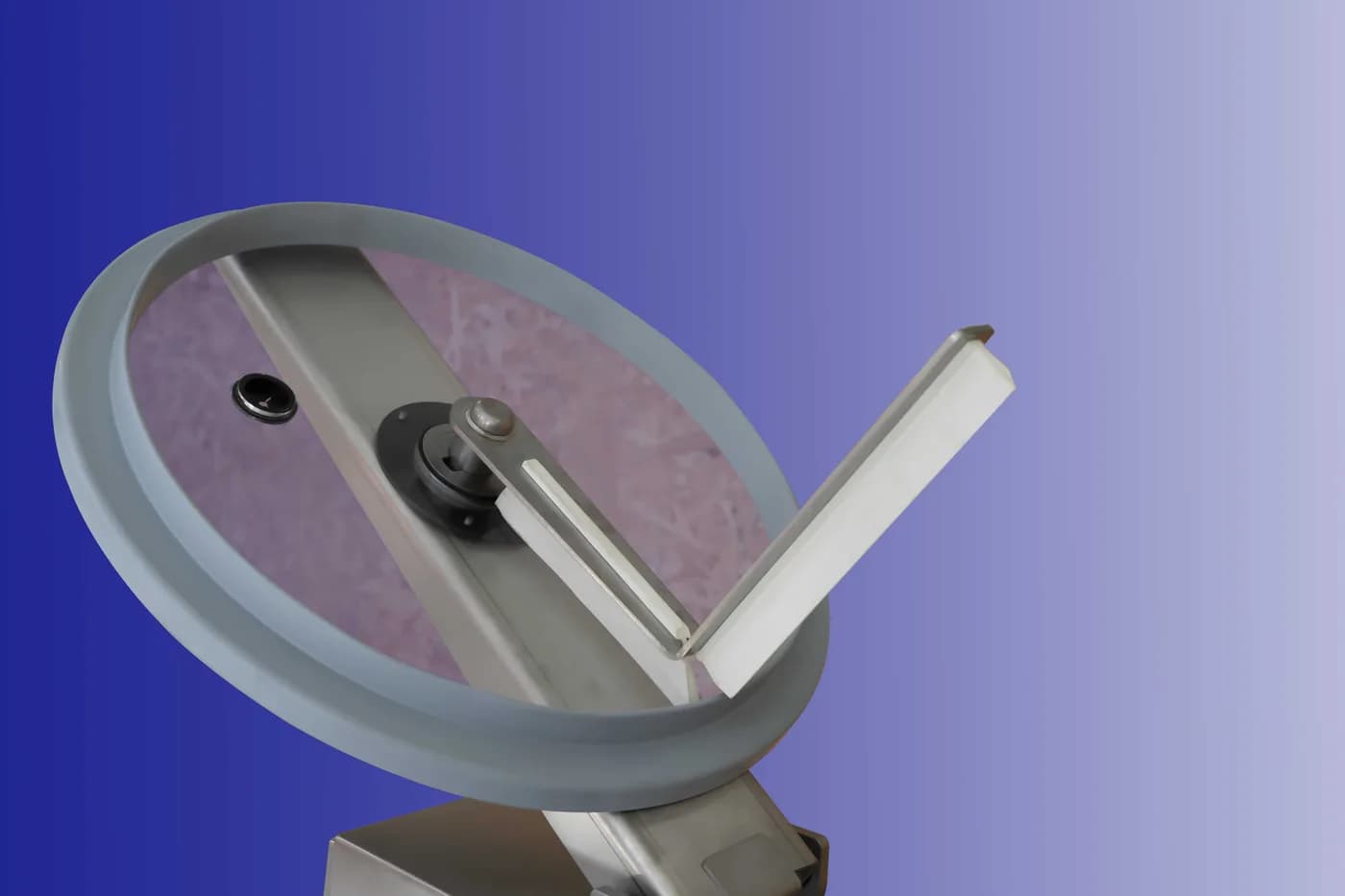
At the centre of the machine sits a multi-blade rotor mounted vertically at the base of the bowl. As the blades turn they cut the product, while the conical geometry of the bowl continuously returns the cut material to the centre. Cutting and mixing are therefore not two separate operations but two results of a single movement.
The texture you get is the product of three variables: blade speed, running time and the fill level in the bowl. The same machine will produce a coarse chop at 600 rpm and a silky paste at 3,000 rpm. Speed control is what separates a cutter mixer from a simple chopping machine.
A blade running at high speed transfers heat into the product through friction. In some productions this helps (melting in processed cheese) and in others it ruins the batch, as with souring in hummus or aroma loss in spices. Heat management matters as much as capacity when choosing a machine.
- Cutting, mixing and emulsifying all happen in one bowl. Nothing is transferred between steps.
- Texture is set by speed and time; models with recipe memory hold batch consistency.
- Bowl volume is not product volume: a safe fill level is usually 60-70% of the bowl.
Blender, food processor and cutter mixer compared
All three work with a blade, but they are designed for different jobs. A blender needs a fluid medium; without liquid the blade spins free and the product climbs the bowl wall. A food processor is built for low speeds, short runs and small volumes; its motor heats up under continuous production. A cutter mixer is designed to process low-moisture, dense products at production tempo, shift after shift.
The practical test: if your product does not pour off a spoon and you produce for more than a couple of hours a day, the machine you need is a cutter mixer.
| Blender | Food processor | Cutter mixer | |
|---|---|---|---|
| Working medium | Needs liquid | Low moisture, small batch | Runs without liquid |
| Typical speed | 10,000+ rpm, fixed | 1,500-3,000 rpm | 600-3,000 rpm, adjustable |
| Batch volume | 1-4 L | 2-8 L | 6-200 L |
| Continuous duty | Short bursts | Short bursts | Full shift |
| Texture control | None | Stepped | Stepless (inverter) |
| Typical use | Drinks, soups | Home / small kitchen | Industrial production |
Vertical and horizontal cutters
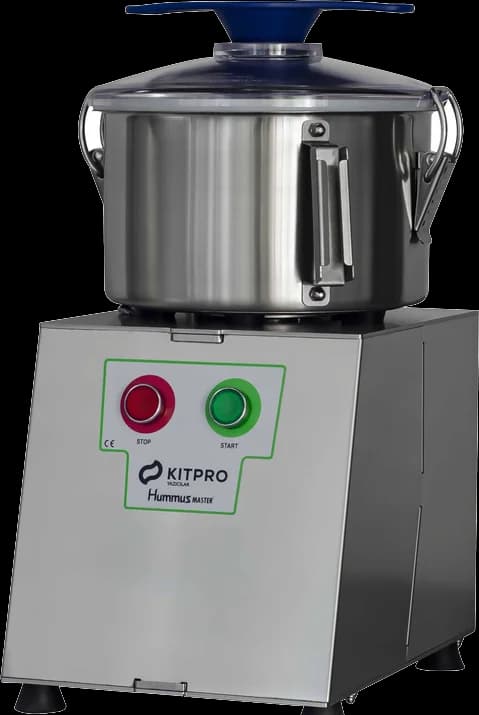
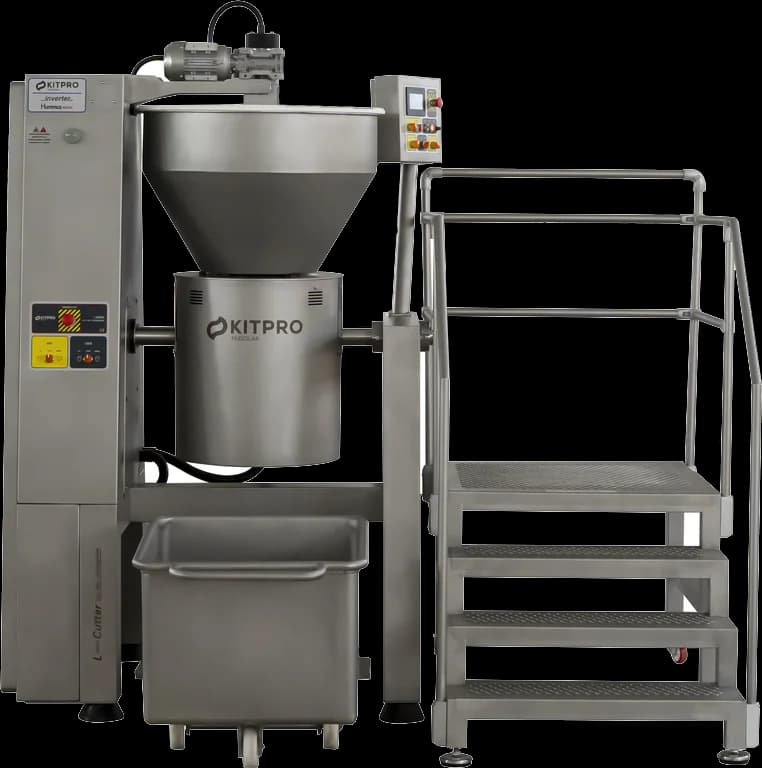
A vertical cutter mixer turns its blade at the bottom of the bowl and discharges by tilting. It is easy to clean, has a short drive path and allows fast batch changeovers; it is the type preferred across most of food production. The KITPRO range is built on it.
A horizontal cutter (the classic bowl cutter) relies on a rotating horizontal bowl working against a blade set turning in the vertical plane. It is used mainly for meat emulsions in very large batches. It is a fixed line installation and trails vertical machines on flexibility and cleaning.
There is a third category in between: jacketed cutters, which circulate water or oil through the outer wall of the bowl to heat or cool during processing. Where temperature is part of the recipe (processed cheese, hot sauces, cooked fillings) this is the type you need.
Where it is used
A cutter mixer earns its place in any food production with a "break down and homogenise" step. In a restaurant kitchen it cuts daily prep to minutes; in a factory it is the machine that makes a recipe repeatable.
- Hummus, pastes and dips: smooth texture with temperature under control.
- Sauces and emulsions: mayonnaise, pesto, chilli pastes.
- Tahini and nut butters: wet grinding and homogenisation.
- Processed cheese: melting and emulsifying in a heated bowl.
- Meat processing and charcuterie: sausage, salami and sucuk emulsions.
- Ready meals and soups: purées, bases and fillings.