

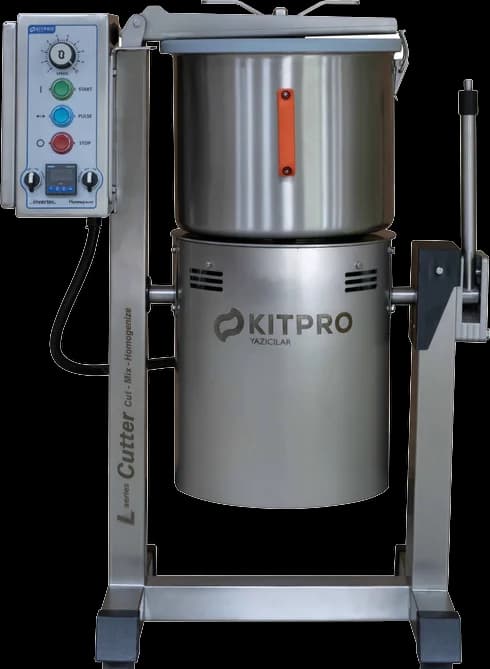
However sensitive the chromatograph, the result of an analysis is decided the moment the sample is prepared. For more than 20 years KITPRO has worked with public institutions to develop machines that turn dried figs, dried apricots, raisins, grains, fruit, vegetables and ready meals into a homogeneous mass, ready for pesticide and mycotoxin testing.
What it brings to Laboratory Sample Preparation
The advantages that make the difference in this application area.
The whole sample, one homogeneous mass
From a 10 kg fig sample to grain, fruit and vegetable samples, the entire sample becomes a fine, homogeneous mass, so every test portion represents the whole.
Spare sets against cross-contamination
With spare blades, lids and bowls, one set is washed while the next sample runs on another, reducing the risk of carry-over between samples.
Versions built for the laboratory
Flat blades for efficient grinding of dry material, fixed baffles inside the bowl that guide product to the blades, and powerful fixed-speed, high-torque motor options.
Refined with public institutions
Developed over more than 20 years of work with public institutions, around the real needs of testing laboratories.
From the lot to the chromatograph: a sample's journey
Kilograms of product are finally tested through a portion of a few grams. Whether that portion represents the lot is decided at the homogenisation step.
- 01
Sampling
Small samples taken from different points of the lot are combined. For dried figs the aggregate sample is 30 kg (EU 401/2006).
- 02
Division
The aggregate sample is mixed and divided into three 10 kg laboratory samples before grinding. Division is not needed if equipment can homogenise all 30 kg at once.
- 03KITPRO
Homogenisation
The entire laboratory sample is finely ground and fully homogenised, preferably by the slurry technique with added water. Daylight is kept away during the process.
- 04
Test portion
A representative portion of a few grams is weighed from the homogeneous mass. If the previous step fell short, this small portion does not represent the lot.
- 05
Extraction and clean-up
Pesticides use the QuEChERS method (EN 15662); dry products are hydrated with water first. For mycotoxins the extract passes through clean-up steps such as immunoaffinity columns.
- 06
Chromatographic analysis
Multi-residue screening by LC-MS/MS and GC-MS/MS; HPLC or LC-MS/MS for aflatoxins and ochratoxin A. The result is compared with the legal maximum levels.
Which machine for which sample?
Three main solutions, depending on the sample type your laboratory handles most.
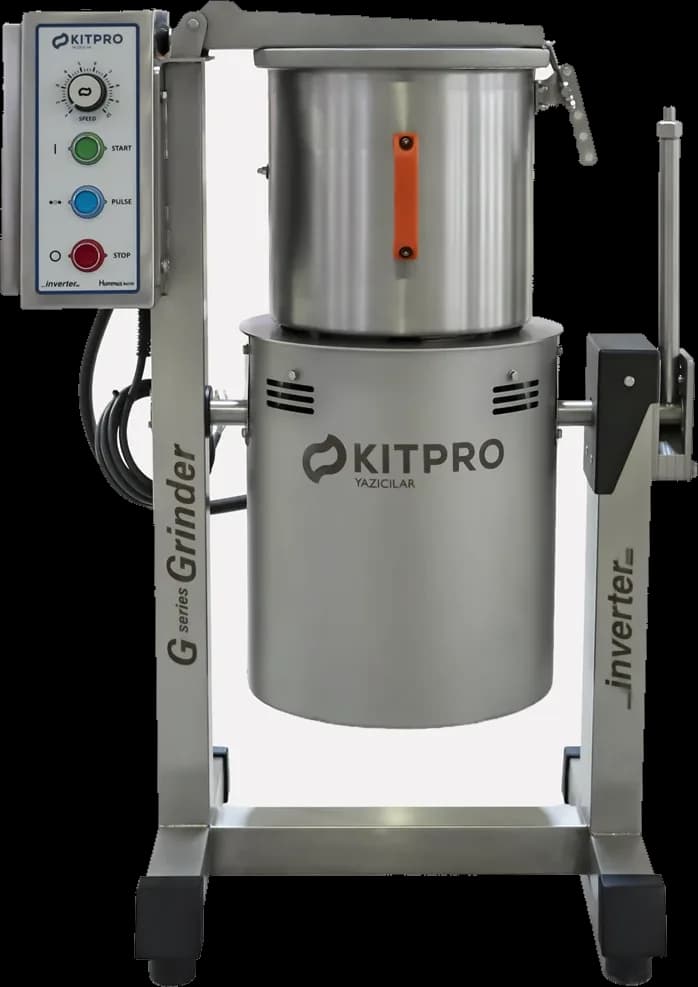
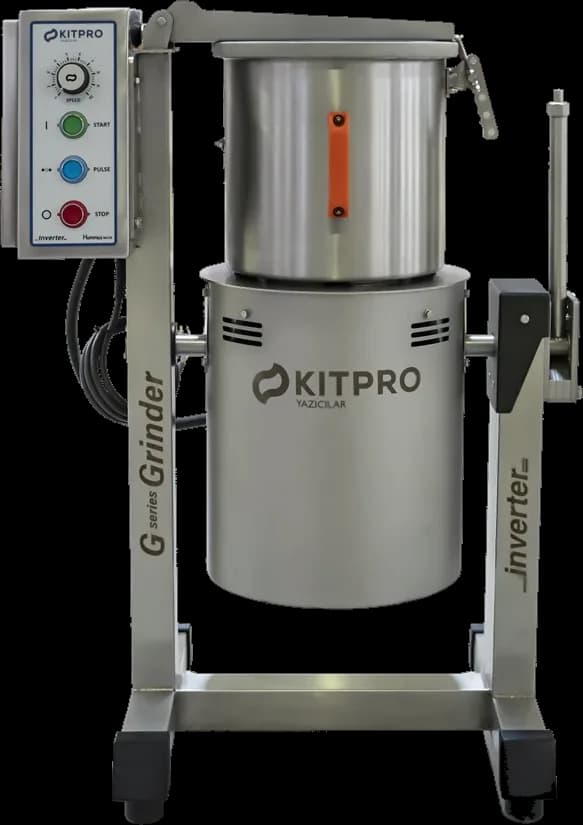
G Series
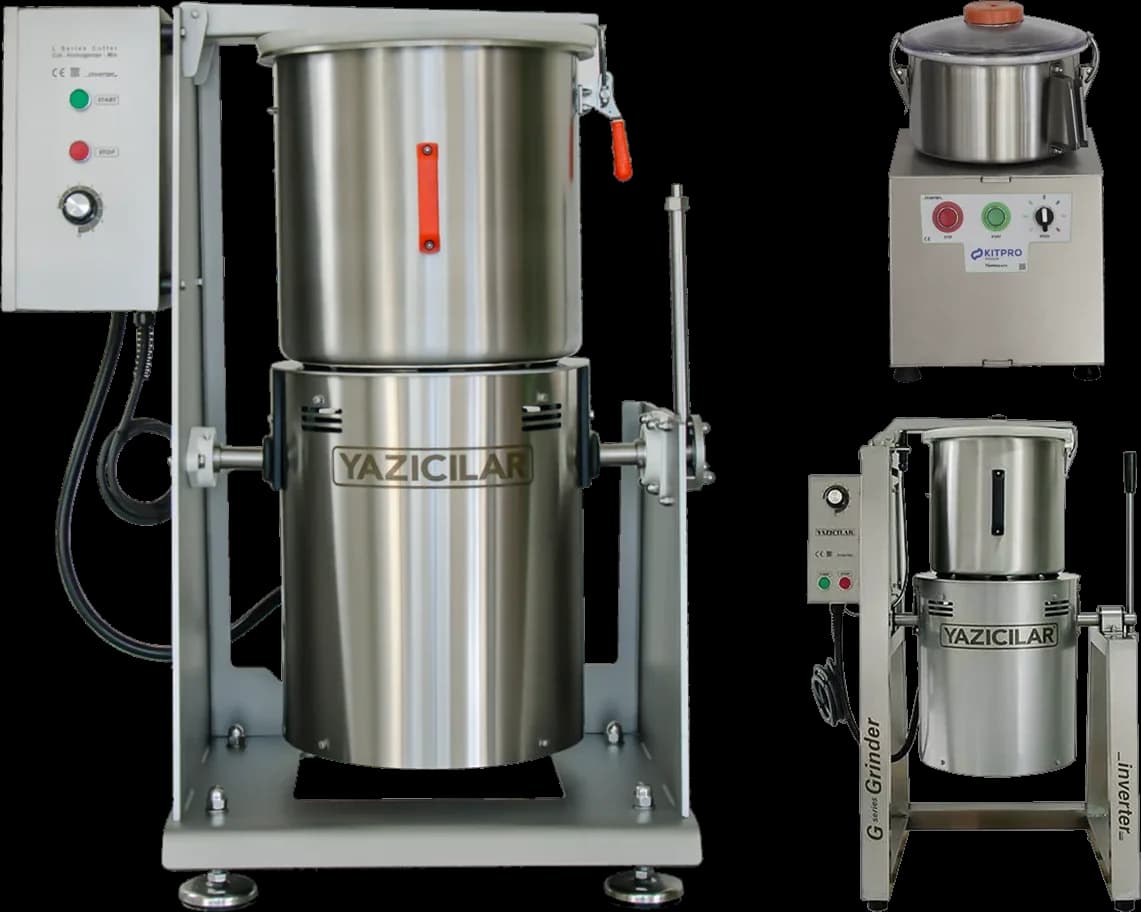
Grinders that turn dry, hard grain samples into a fine, homogeneous flour; countertop and floor-standing models.
L Series
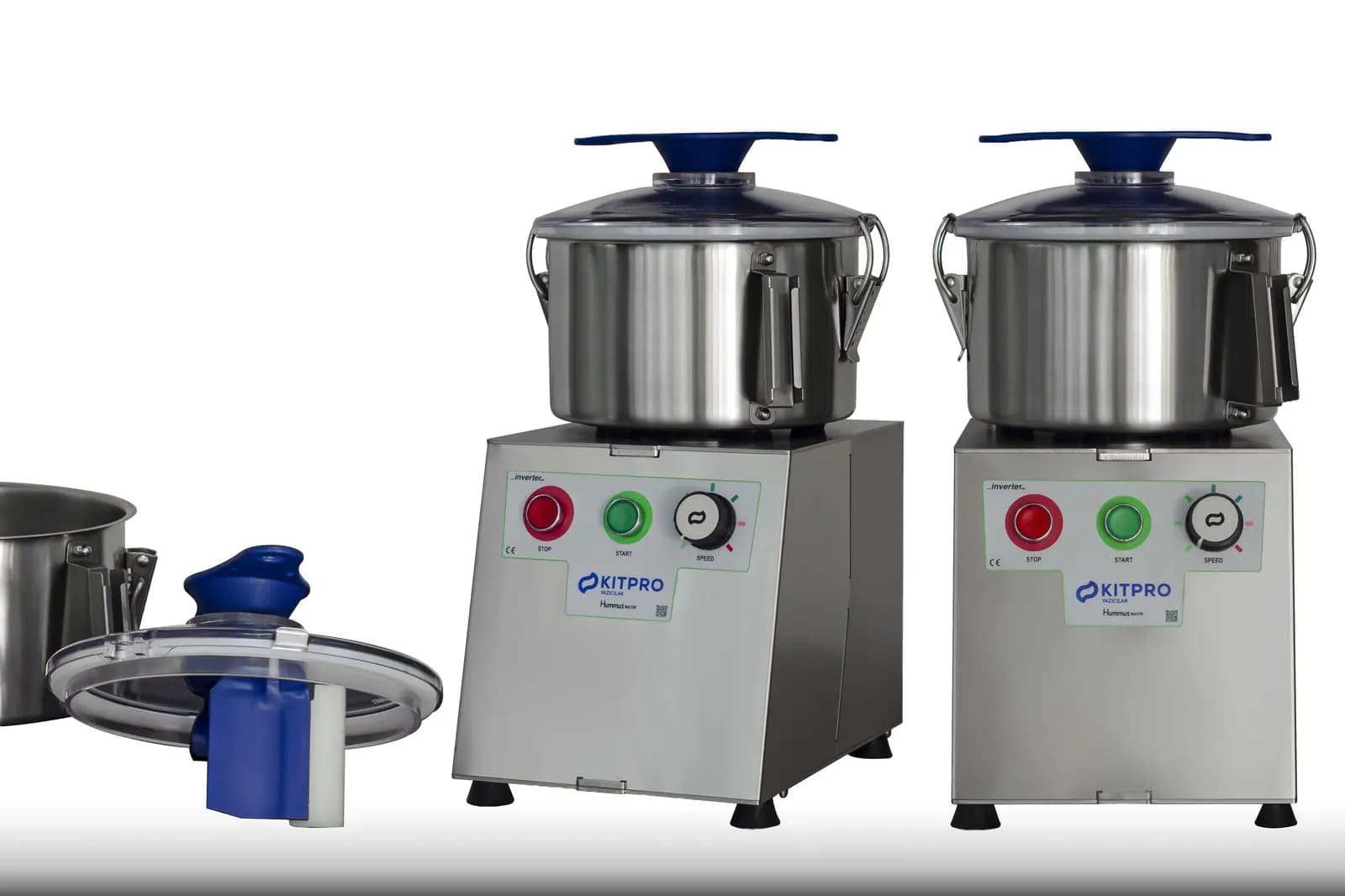
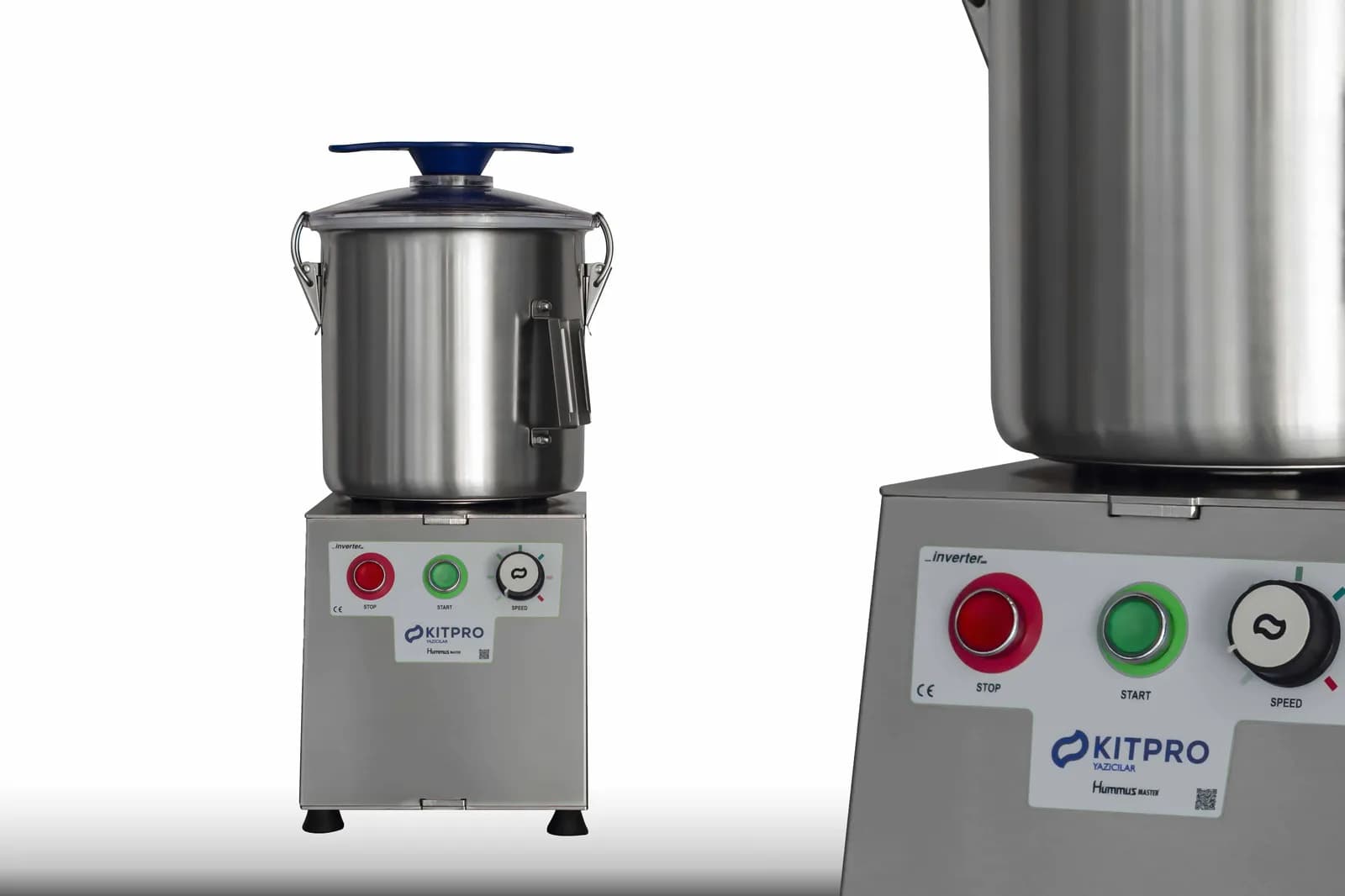
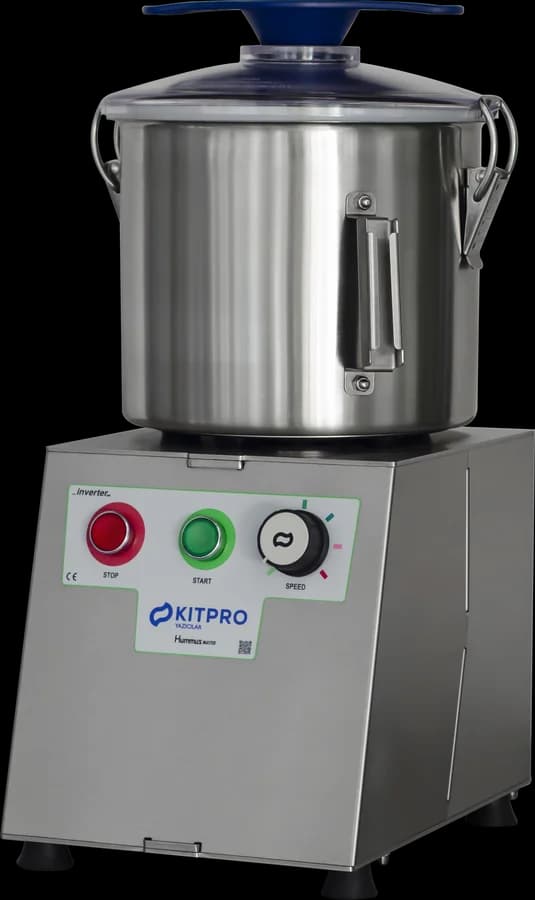
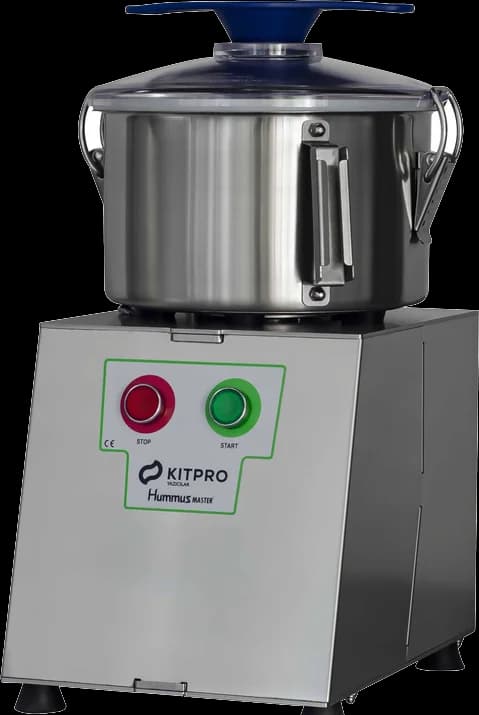
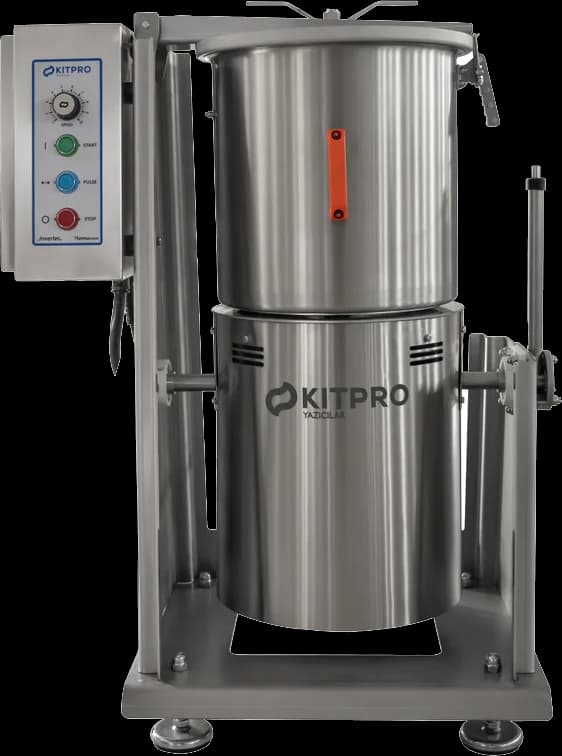
Countertop and floor-standing cutter-mixers for general samples, from fresh produce to chocolate and desserts, including the L20I-LAB laboratory version.
L45-HP
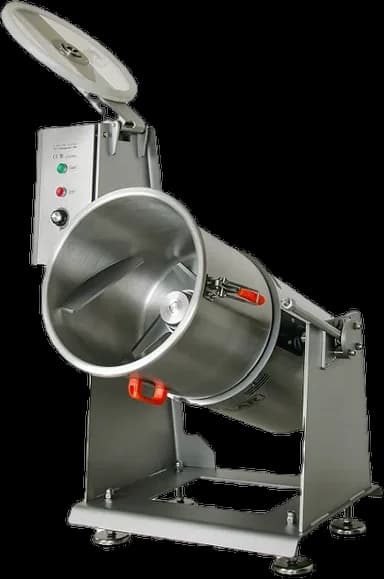
A special fixed-speed, high-torque disintegrator developed for sticky, hard dried fruit.
L45-HP: a special disintegrator for dried fruit
Dried figs, dried apricots and raisins push ordinary cutters to their limit with their high sugar content, sticky texture and hard structure. The L45-HP was developed specifically for these samples.
- Fixed-speed, high-torque motor: easy to use, no adjustment needed
- Developed specifically for dried figs, dried apricots and raisins
- Breaks down sticky, hard dried fruit without strain
Technical details of the L45-HP are not published on this site. Contact us for information matched to your sample type and volume.
The result starts with the sample
The most sensitive instrument in pesticide and mycotoxin testing is the chromatograph, yet the accuracy of the result is settled long before the sample reaches it, at the moment it is prepared. The portion that goes into the analysis weighs anywhere from a few grams to a few tens of grams. For that small amount to represent kilograms of product, the entire sample must first become a fine, homogeneous mass.
Mycotoxins are not evenly distributed in a product. Aflatoxins and ochratoxin A are often concentrated in the fruit of a small part of the lot; a few contaminated pieces can decide the average of a much larger lot. If homogenisation falls short, two portions from the same sample can give very different results. A wrongful rejection or, worse, a contamination that goes unnoticed.
That is why, for a testing laboratory, the cutter-mixer is not ordinary kitchen equipment but the first and decisive link in the analytical chain.
What makes the laboratory versions different?
Laboratory samples behave differently from products on a production line: they can be dry, hard, sticky or layered, and they must give the same result every time. That is why KITPRO's laboratory versions differ in three ways.
Flat blades: flat-bladed options are offered for efficient grinding of dry material, bringing dry, hard samples down to a fine structure quickly.
Fixed baffles inside the bowl: fixed baffles keep guiding product that escapes to the bowl wall back to the blades, so the whole sample is processed and the risk of whole pieces being left behind falls.
Powerful fixed-speed motor options: a fixed speed that needs no adjustment makes the machine easy to use, while high torque lets the motor run without strain on sticky, demanding samples such as dried figs and raisins.
The catalogue's L20I-LAB is the laboratory version built on the 20-litre body of the 20-30 L Series: it runs a 5.5 kW motor, against the 2.2 kW motor of the standard L20IV with the same bowl volume. Its speed range is 600-3,000 rpm and the supply is 400 V three-phase.
Dried figs: from 30 kg to 10 kg, from 10 kg to grams
Regulation (EC) No 401/2006, which sets the EU rules for sampling for mycotoxins, defines a specific method for dried figs: samples taken from different points of the lot are combined into a 30 kg aggregate sample, mixed, and divided into three 10 kg laboratory samples before grinding. Each laboratory sample is finely ground separately and fully homogenised.
The regulation prefers the slurry technique for homogenisation: the figs are ground together with a set proportion of water into a fluid, homogeneous mix. If equipment is available that can homogenise all 30 kg at once, the sample need not be divided. Because aflatoxin gradually breaks down under ultraviolet light, daylight should also be excluded as far as possible during the procedure.
Ten kilograms of figs plus the added water exceed the capacity of an ordinary food processor, and the sticky, hard structure strains weak motors. For this job KITPRO offers the L45-HP, a special fixed-speed, high-torque disintegrator for dried figs, dried apricots and raisins. Contact us for technical details.
Raisins, dried apricots and ochratoxin A
The main mycotoxin monitored in seedless raisins, sultanas and currants is ochratoxin A, with a maximum level of 8.0 µg/kg in the EU and the Turkish Food Codex. Contamination is not evenly spread across the lot here either, so (as with figs) a sufficient quantity of sample must be fully homogenised.
With their high sugar content, raisins and dried apricots are sticky matrices: they smear onto the blade and bowl wall, and uneven grinding leaves whole pieces behind. A fixed-speed, high-torque motor and fixed baffles that guide product to the blades make it easier to get a smooth, repeatable purée from samples like these.
Wheat and maize: dry grinding of grain samples
In grain testing laboratories, dry, hard samples such as wheat and maize are turned into a fine, homogeneous flour before mycotoxin and pesticide analysis. Aflatoxins and fumonisins are monitored in maize, and mycotoxins such as deoxynivalenol (DON) and zearalenone in wheat; these are not evenly spread across a lot either, so the whole sample must be ground.
KITPRO's G Series grinders are recommended for these samples. In a series with countertop and floor-standing models, the G6 (with speeds of 3,000-6,000 rpm) is ideal for small batches and laboratory use, while the G20 and G45 suit larger sample volumes. Flat-bladed options for efficient grinding of dry material come into their own with grain samples too.
Pesticide residues: hundreds of substances, one homogeneous sample
Today's pesticide laboratories can screen more than 600 active substances in a single run with LC-MS/MS and GC-MS/MS. In most of these multi-residue methods, sample preparation is based on QuEChERS (EN 15662): a portion of the homogeneous sample is extracted with acetonitrile, partitioned with salts and cleaned up.
For fresh fruit and vegetables, breaking the sample down quickly and evenly spreads the residues uniformly through it. For dry products the method calls for the sample to be homogenised with water, or soaked to swell, before extraction, a step that also needs a strong cutter-mixer.
Some laboratories chill the sample or homogenise it with dry ice to protect substances prone to degradation. Talk to our team about a configuration suited to your sample type and method.
Chocolate, desserts and ready meals
Ready meals bring different textures together in one sample: a creamy dessert, a hazelnut chocolate, a dish in sauce. Before analysis, every component must become a single homogeneous mass; otherwise the test portion represents only one layer.
In high-fat, high-sugar matrices, too high a speed can cause heating and fat separation. On inverter-controlled models the speed can be set steplessly between 600 and 3,000 rpm, so the right speed can be chosen for each sample.
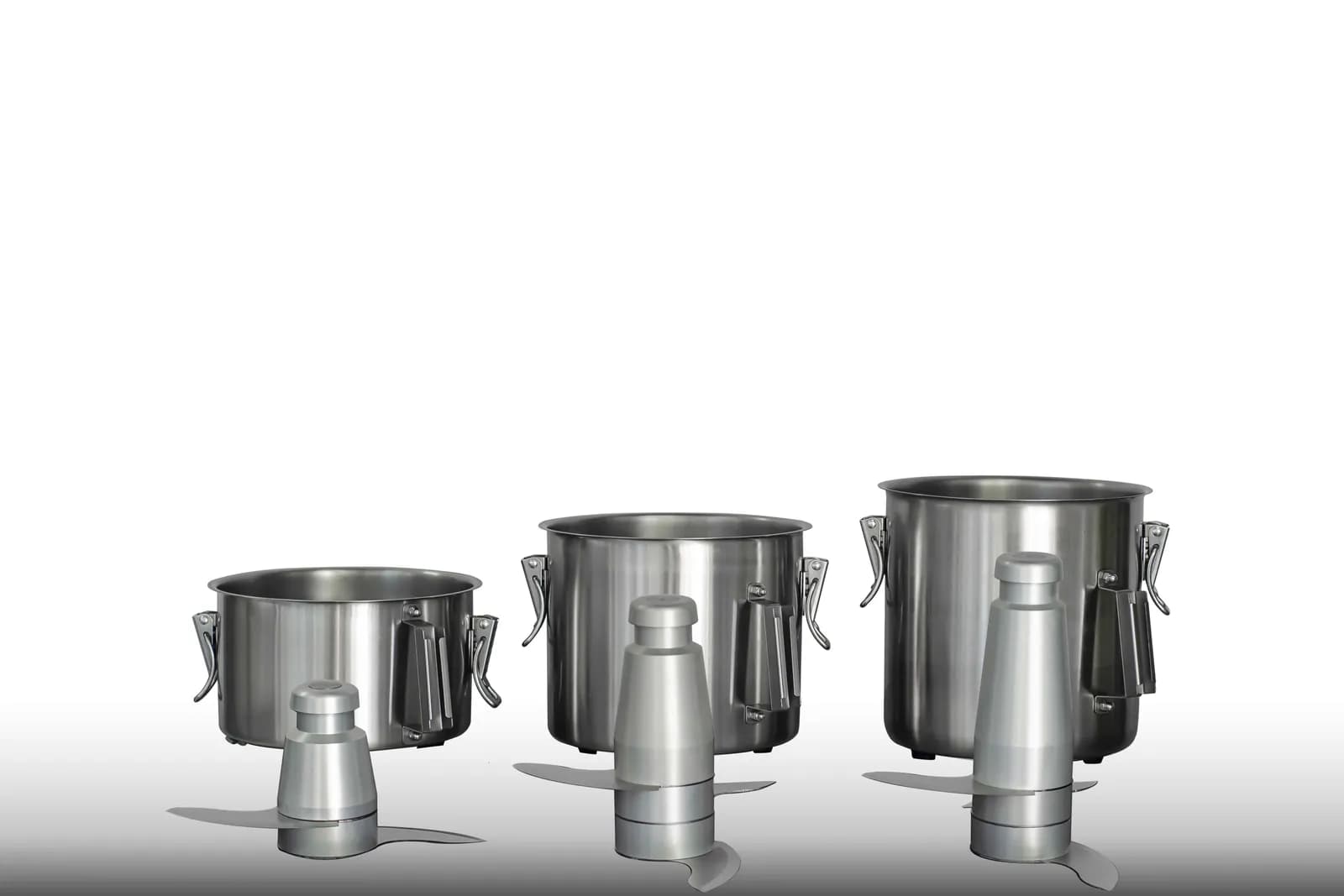
Against cross-contamination: spare blades, lids and bowls
In a laboratory, even the smallest residue left from one sample can change the result of the next. So after every sample the blade, lid and bowl must be cleaned completely, and on busy days this cleaning time becomes the laboratory's real bottleneck.
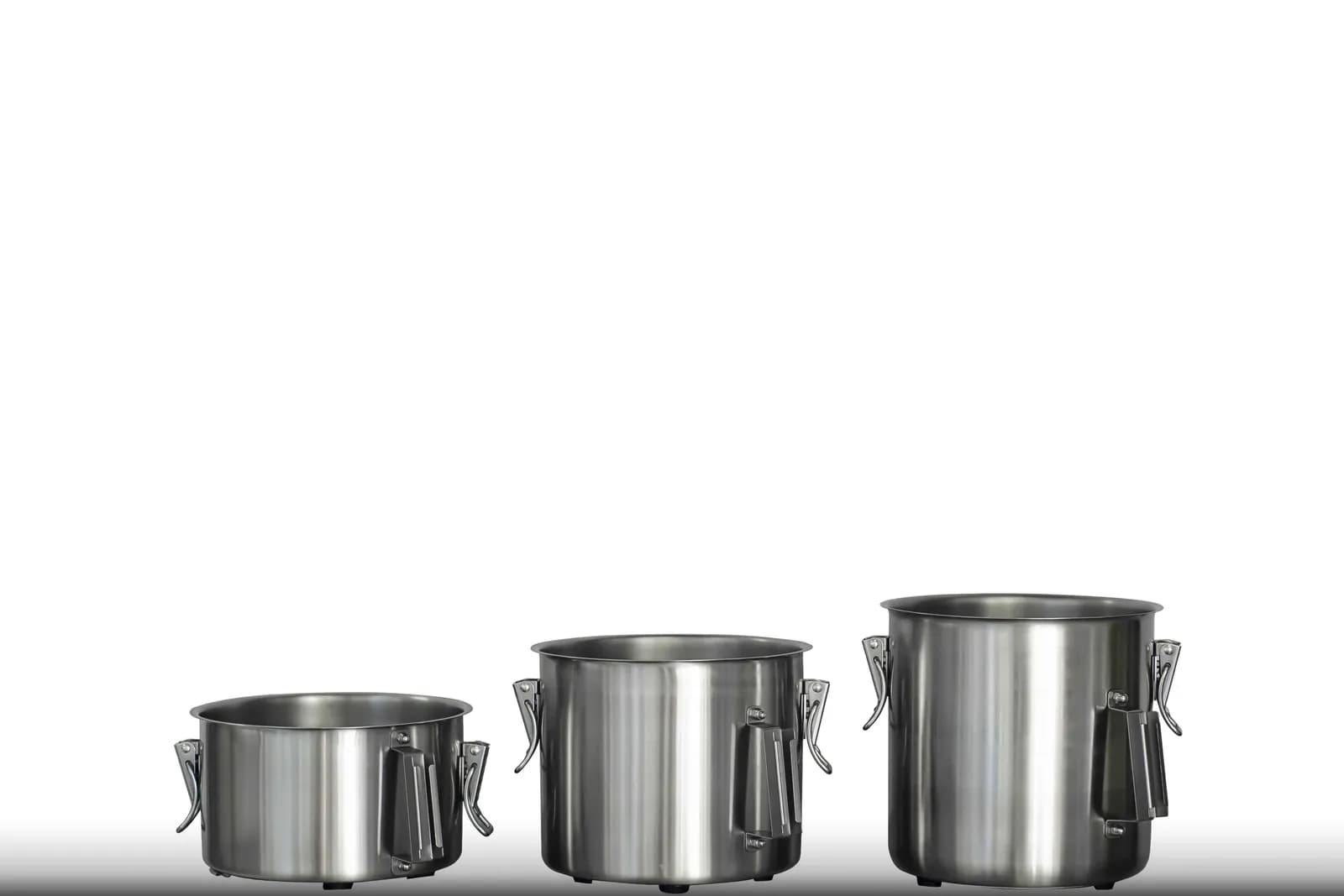
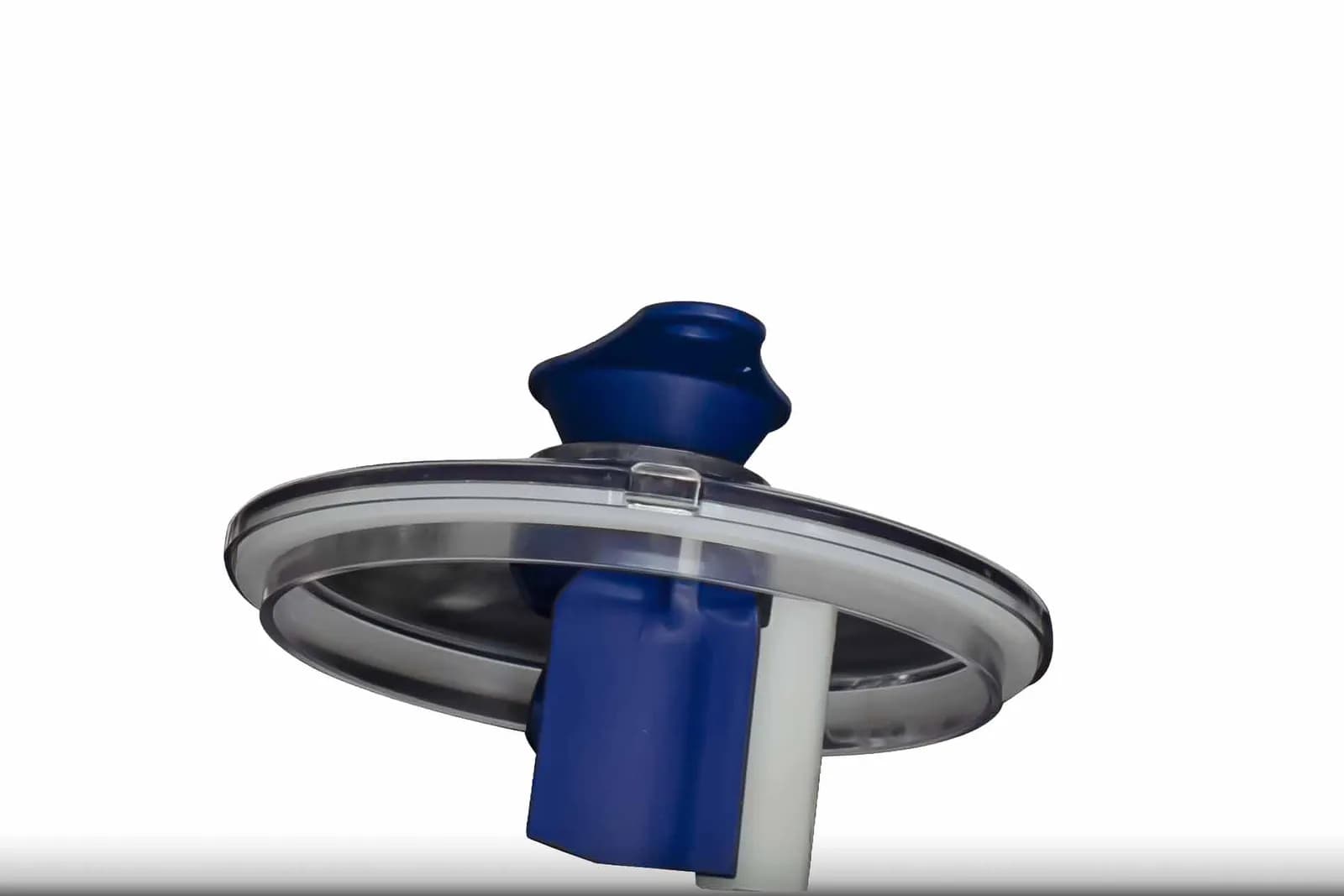
KITPRO makes spare blade assemblies, lids and bowls readily and quickly available to laboratory users. A laboratory working with several sets moves on to the next sample with one set while another is being washed: the risk of cross-contamination falls and the machine never stands idle. The blade assembly comes off without tools; the bowl and product-contact parts are stainless steel.
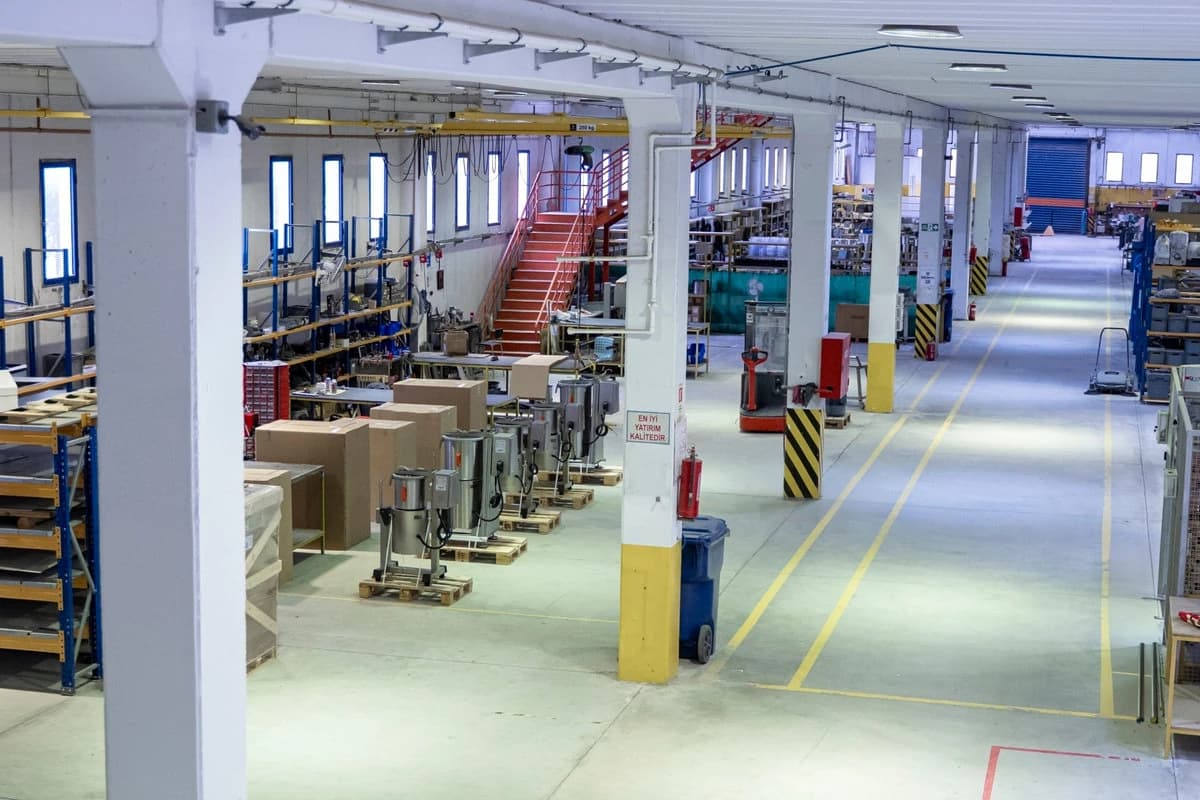
More than 20 years of work with public laboratories
KITPRO | YAZICILAR has developed its solutions for food testing laboratories in close cooperation with public institutions for more than 20 years. That experience shows in laboratory-ready versions of the machines, in blade and bowl options for each sample type, and in a fast spare-parts service.
Türkiye is the world's leading exporter of seedless raisins and dried figs, accounting for roughly half of global dried fig exports. Behind every exported lot lies an analysis done right. With machines built in our own plant and spare parts whose continuity we guarantee, we stand beside laboratories at the first link of that chain.
Mycotoxin maximum levels in dried figs and raisins
Results are judged at parts-per-billion level (µg/kg = ppb). At limits this low, a correct decision depends on how well the sample was homogenised.
| Product | Parameter | Maximum level |
|---|---|---|
| Dried figs | Aflatoxin B1 | 6.0 µg/kg |
| Dried figs | Total aflatoxins (B1 + B2 + G1 + G2) | 10.0 µg/kg |
| Dried figs | Ochratoxin A | 8.0 µg/kg |
| Dried vine fruit (raisins, sultanas, currants) | Ochratoxin A | 8.0 µg/kg |
Source: Commission Regulation (EU) 2023/915, Annex I; the Turkish Food Codex values are aligned with these limits. Sampling: Commission Regulation (EC) No 401/2006. Values are for information; the legislation in force prevails.
From the laboratory and the workshop
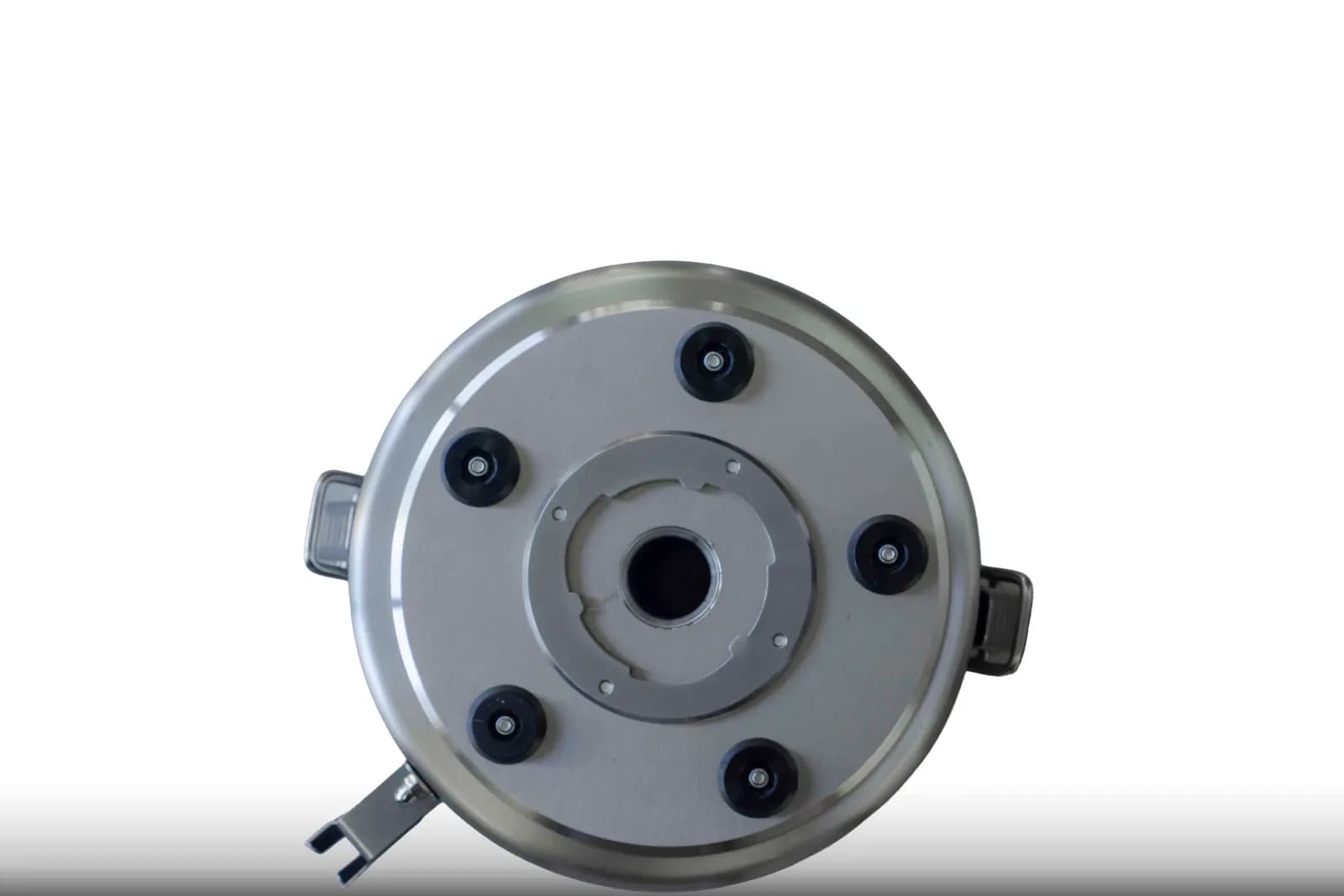
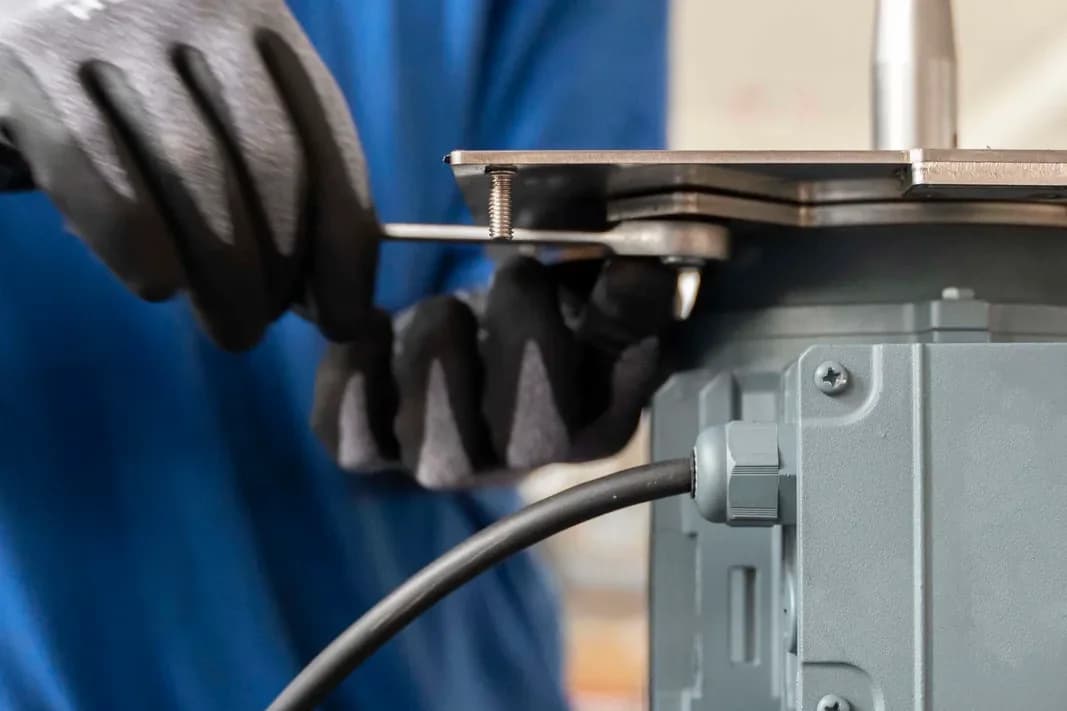
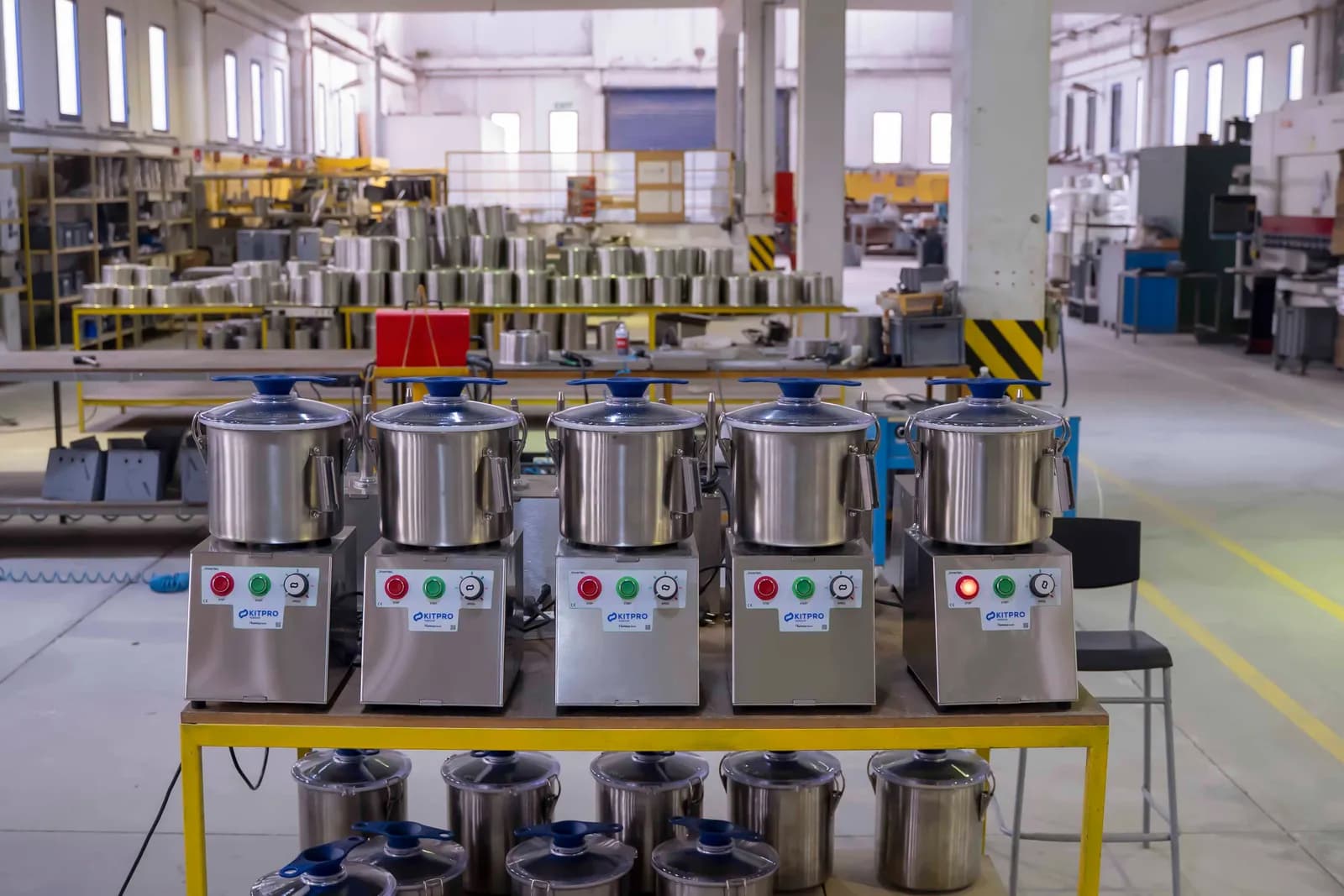
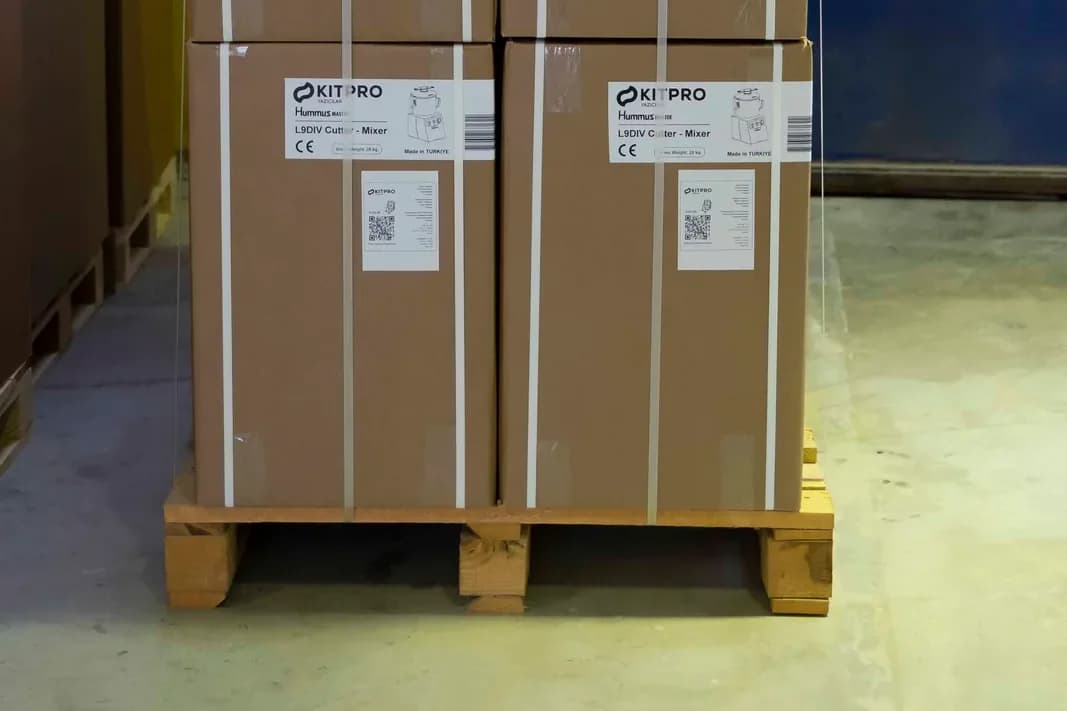
Cleaning between samples and controlling cross-contamination start with parts that come apart easily and are easy to source.
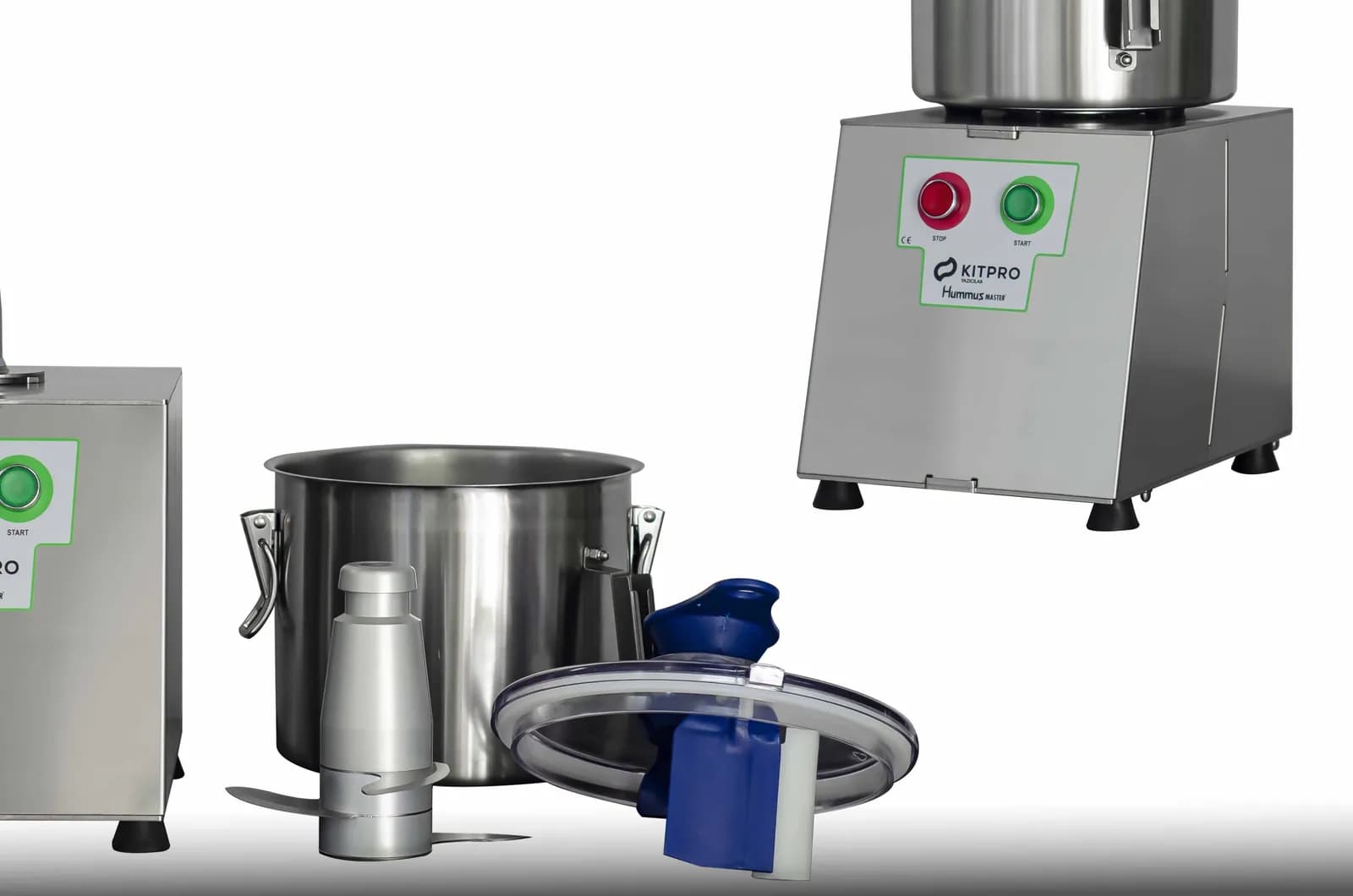
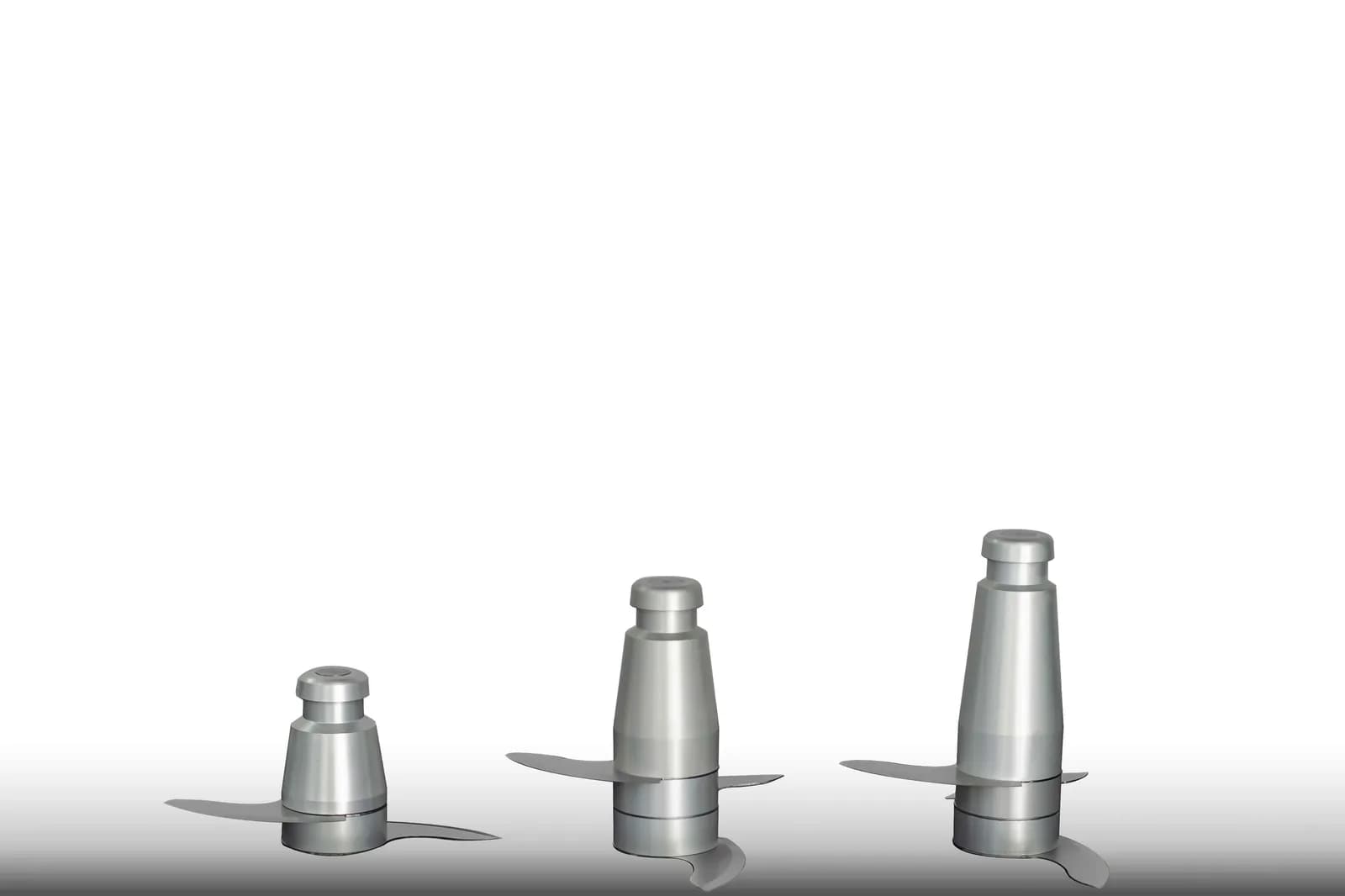
The right machines for Laboratory Sample Preparation
The KITPRO models most often chosen for this application area.
Questions about Laboratory Sample Preparation
Which machine suits which sample?
For laboratories that mainly test grains such as wheat and maize, the G Series countertop and floor-standing grinders are recommended; for general fruit, vegetable and ready-meal samples, the L Series countertop and floor-standing cutter-mixers, including the L20I-LAB laboratory version with a 5.5 kW motor. For dried figs, dried apricots and raisins we developed the L45-HP, a special fixed-speed, high-torque disintegrator. Tell us your sample type and daily sample count for an exact recommendation.
What are the technical specifications of the L45-HP?
The L45-HP is a fixed-speed, high-torque disintegrator developed specifically for dried figs, dried apricots and raisins. We do not publish its technical details on our website; please contact us for information matched to your sample type and volume.
Why is a 10 kg sample ground for dried fig testing?
Aflatoxin is not evenly distributed in a lot of figs; a few contaminated fruits can decide the result for the whole lot. That is why EU Regulation 401/2006 requires a 30 kg aggregate sample, divided before grinding into three 10 kg laboratory samples, each fully homogenised. Only then can the few grams that go into the analysis be trusted.
What is the slurry technique?
Grinding the sample together with a set proportion of water into a fluid, homogeneous mix. For dry and sticky products it gives a more homogeneous result than dry grinding, and EU Regulation 401/2006 names it the preferred homogenisation technique for dried figs. The water ratio is set by the laboratory's method.
How can we prevent cross-contamination between samples?
The blade, lid and bowl must be cleaned completely after every sample. Working with spare blade, lid and bowl sets lets you move on to the next sample while one set is being washed. KITPRO makes these parts readily and quickly available to laboratories, and the blade assembly comes off without tools.
Why does homogenisation matter in pesticide testing?
In multi-residue methods (e.g. QuEChERS, EN 15662) the analysis uses a portion of a few grams taken from the homogeneous sample. If residues are unevenly spread, the result changes from portion to portion and repeatability suffers. For dry products the method also calls for the sample to be homogenised with water, or hydrated, before extraction.
What should we watch for when preparing samples for aflatoxin testing?
Because aflatoxin gradually breaks down under ultraviolet light, daylight should be excluded as far as possible during homogenisation and the steps that follow. The entire laboratory sample should be processed, no part should be set aside before homogenisation, and product-contact parts should be cleaned completely after every sample.
Let's find the right machine for your production
Answer two questions to find your match, or request a quote directly. Our engineering team replies within 24 hours.