
Signs of a dull blade
You do not have to strip the machine to know the state of the blade. The machine already tells you. If two of the following appear together, it is time to sharpen.
- Batch time has grown: the same recipe that finished in 8 minutes now takes 11.
- Texture is uneven: uncut pieces are left in the mix.
- The product is running hot: material that is not being cut turns into friction instead.
- Sound and vibration have changed: the blade seems to be slipping through rather than gripping the product.
- The motor is labouring: current draw at the same fill level has risen and protection trips more often.
Setting the sharpening interval
A fixed calendar is misleading, because wear depends on what you process. Fibrous and hard materials (dry spices, shelled nuts, frozen meat) dull a blade far faster; soft products such as cooked chickpeas, cheese and fillings wear it very little.
The reliable method is to log batch times in the first months. Sharpen when the time rises roughly 20% above your baseline; once you have found that point you know the real interval for your own plant.
As a rough starting point: three months for industrial lines running at full capacity, six months for a single-shift producer, and twelve months for a restaurant kitchen running a few batches a day.
Removal, refitting and sharpening rules
Blade work is the riskiest maintenance step on the machine; mistakes in sequence or orientation put both the operator and the machine at risk.
- Disconnect the machine from power before any work. Opening the lid is not enough.
- Handle the blade with cut-resistant gloves, never bare hands.
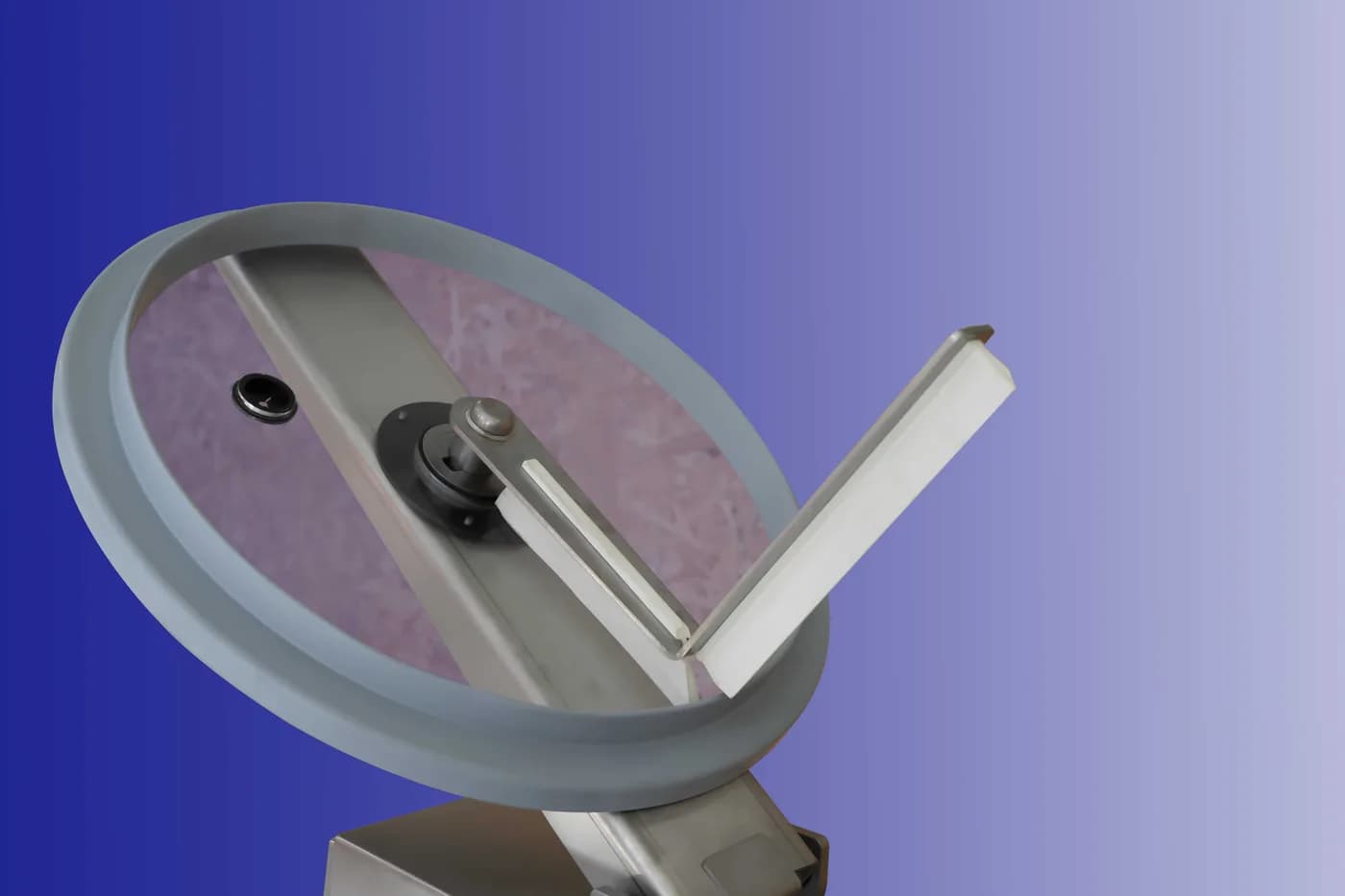
- Photograph the orientation and order of the blade set before removing it; a blade fitted the wrong way round works with its back, not its edge.
- Sharpen to the original edge angle; change the angle and you change the cutting geometry.
- Do not let the blade overheat while sharpening. Heated steel loses hardness and dulls faster.
- Clean the shaft and hub faces at every refit; leftover product seats the blade off-centre and causes vibration.
What extends blade life
Most wear comes not from processing but from mistakes around it. The following make a measurable difference.
- Never run an empty bowl: the blade should be working in product, not in air.
- Do not process frozen product directly; let it partially thaw first.
- Check for bone, stones and foreign objects before loading. One hard piece can damage the edge permanently.
- Do not leave the bowl standing after a batch; dried residue behaves like an abrasive during cleaning.
- Do not leave chlorine-based disinfectants in contact longer than specified; they cause pitting corrosion in stainless steel.
- Keep a spare blade set: production does not stop while a set is away for sharpening.