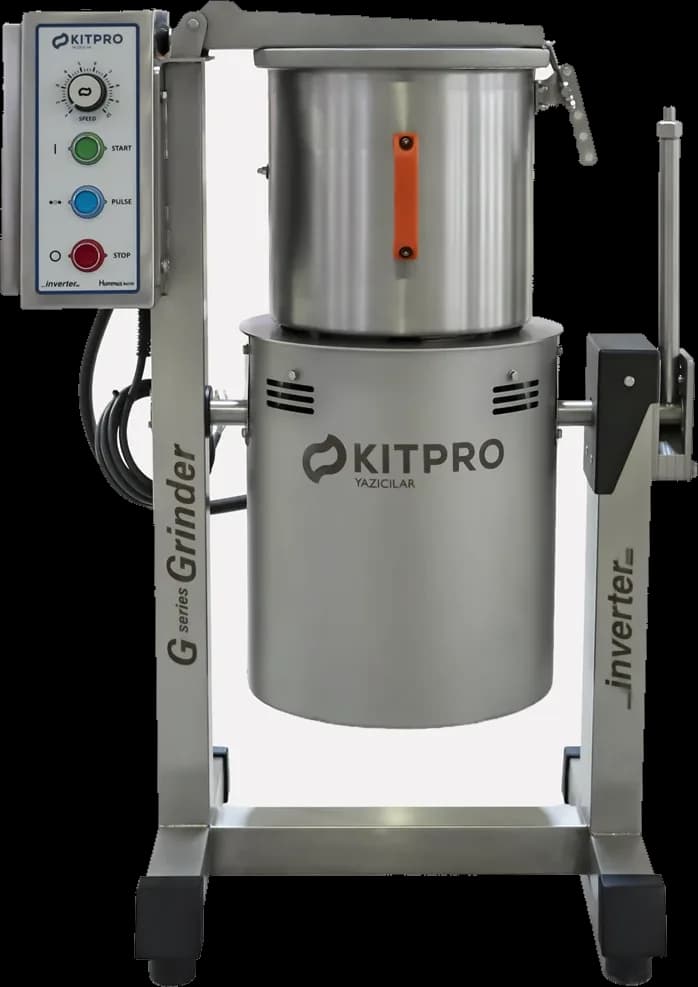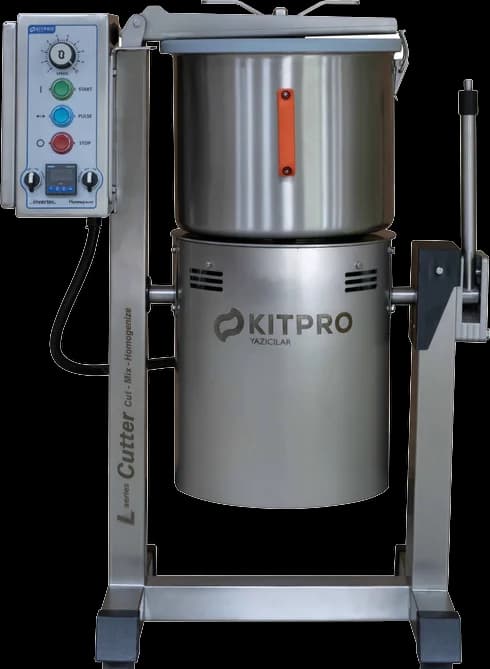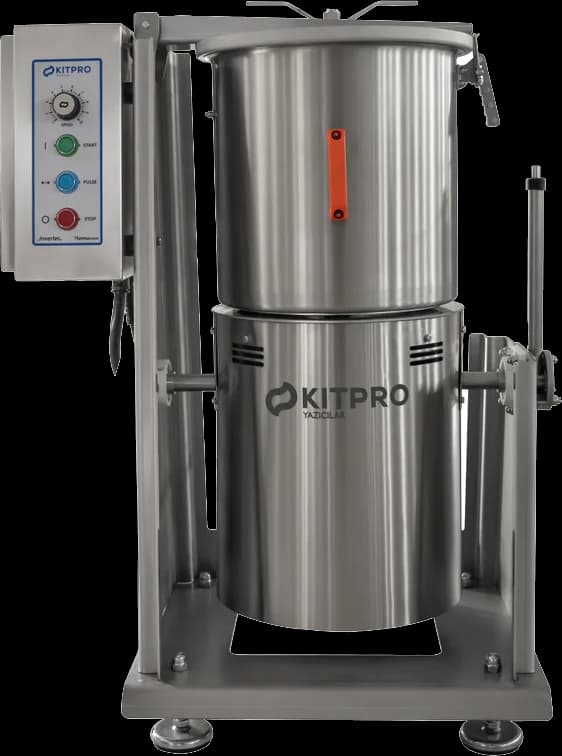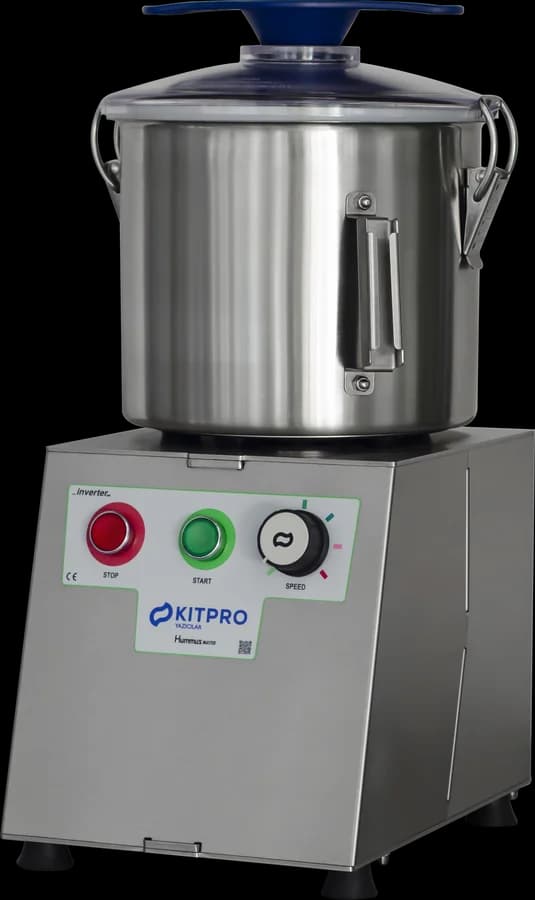

Start with the sample type: dry, fresh or sticky
Laboratory samples fall into three main groups, and each group challenges the machine differently. Dry, hard cereals such as wheat and maize must be turned into a fine flour, which needs a high-speed grinder. Fresh and multi-component samples such as fruit, vegetables, ready meals and desserts are cut and mixed into a single homogeneous mass, which is the job of a cutter mixer.
The third group is the hardest: dried figs, dried apricots and raisins. Their high sugar content makes them smear onto the blade and bowl wall, and their tough texture stalls weak motors. For these samples torque matters more than speed.
| Example samples | Suitable machine | Deciding feature | |
|---|---|---|---|
| Dry and hard | Wheat, maize and other cereals | G6 / G20 / G45 grinder | Up to 7,000 rpm, fine and uniform flour |
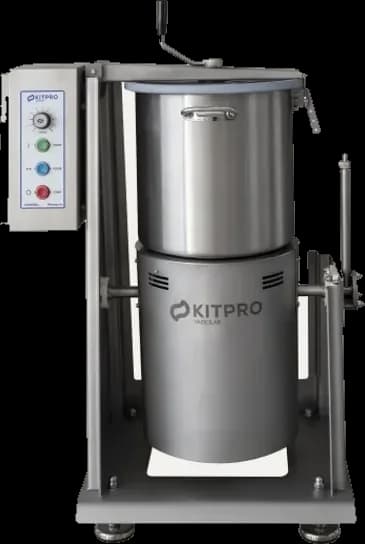
| Fresh and multi-component | Fruit, vegetables, ready meals, desserts | L Series cutter mixer (incl. L20I-LAB) | Variable speed, 600-3,000 rpm |
| Sticky and sugary | Dried figs, dried apricots, raisins | L45-HP | Fixed-speed, high-torque motor |
Sample size and bowl volume
The bowl must take the entire laboratory sample in one go. Splitting a sample and homogenizing the parts separately creates differences between them and defeats the purpose of homogenization.
Dried figs are the clearest example: under EU Regulation 401/2006 the 30 kg aggregate sample is divided into three 10 kg laboratory samples before grinding, and the slurry technique is preferred for homogenization. Together with the added water, that volume far exceeds the capacity of an ordinary food processor. When choosing the bowl, size it for the combined volume of sample and water at the practical fill level of 60-70%.
Fruit and vegetable samples are usually a few kilograms; 6-12 litre countertop cutters are enough for them. Busy laboratories or those taking large samples should consider floor-standing models of 20 litres and above.
Motor torque, speed and blade type
Speed describes how fast the blade turns; torque describes how well it keeps turning under load. With sticky and hard samples torque is what counts: a motor without enough torque slows down under load, heats up and leaves part of the sample unprocessed. The L20I-LAB, for example, uses a 5.5 kW motor instead of the 2.2 kW motor of the standard L20IV with the same 20-litre body.
Blade and bowl design change the result too. Flat blades grind dry material more effectively, and fixed baffles inside the bowl keep sending product that escapes to the wall back to the blades, reducing the risk of whole pieces surviving.
Running at high speed for a long time warms the sample. Some laboratories working with heat-sensitive pesticide residues homogenize under cooling or with dry ice; ask in advance whether the machine is suitable for this.
Cleanability and cross-contamination
Residue from one sample can cause a false positive in the next. That is why quick, tool-free removal of the bowl, blade and lid, and AISI 304 stainless steel construction, matter as much as capacity in a laboratory. A second set of blade, lid and bowl lets you move on to the next sample while the first set is being washed.
Laboratories verify the homogenizer through their own quality control: a blank sample free of contamination is processed and analysed to show there is no carry-over, and results from several test portions taken from the same homogenate are compared to prove homogeneity is sufficient.
- Can a trial be run with your most difficult sample (for example dried figs)?
- Does the bowl take your largest laboratory sample, with its water, in one go?
- Do the blade, lid and bowl come off without tools, and is a spare set available?
- Does the power supply suit your laboratory (230 V single phase or 400 V three phase)?
- How are spare blades and service support provided?