

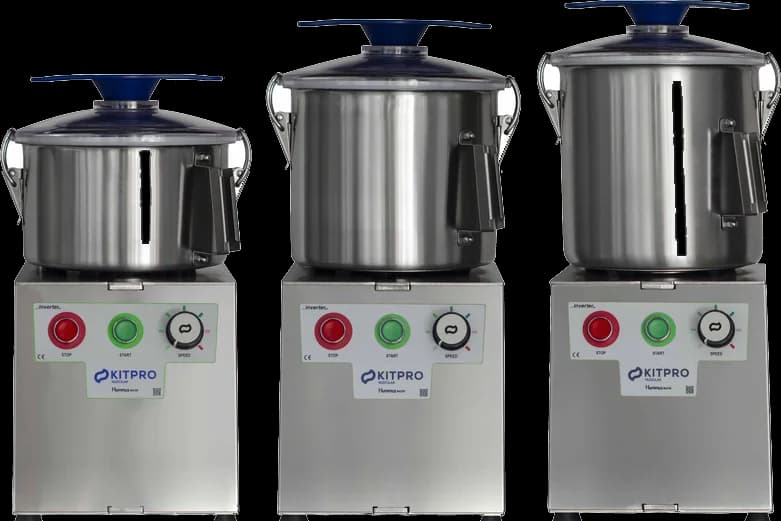
Falafel quality is decided in the mix, not in the fryer. Soaked raw chickpeas, onion, garlic, parsley, coriander and spices: overprocess them and the falafel turns heavy and soaks up oil; leave them too coarse and the ball falls apart in hot oil. KITPRO cutter mixers cut and mix these ingredients in a single bowl, to the grain you want, with speed control. The same method works from a restaurant kitchen to a factory making frozen falafel.
What it brings to Falafel Production
The advantages that make the difference in this application area.
You choose the grain size
Inverter speed control and short runs keep the chickpeas at coarse couscous size instead of turning them into paste. The pulse function on the floor-standing series makes the final adjustment easy.
Herbs and spices spread evenly
Parsley, coriander, onion and spices are processed in the same bowl as the chickpeas, so every ball has the same colour and flavour.
Short runs, cold mix
The mix does not spin in the bowl for long, so friction does not warm it. A cold mix does not turn sticky and the herbs keep their colour.
Easy unloading and cleaning
On the countertop series the blade set comes off without tools; on the floor-standing series the bowl tilts, and on the L120IV it tilts by motor and unloads into a Euro-bin.
Falafel from dried chickpeas to the fryer
In falafel, the cutter mixer is the step where soaked chickpeas become the mix. A typical flow:
- 01
Soaking
Dried chickpeas (fava beans in the Egyptian style, or a mix of both) are soaked overnight in cold water and roughly double in volume. They are not cooked: a mix made with cooked chickpeas falls apart in the fryer.
- 02
Draining
The soaking water is drained well. Excess water softens the mix and makes it harder for the balls to hold their shape.
- 03KITPRO
Cutting
Chickpeas, onion, garlic and herbs go into the bowl and are brought to a coarse couscous texture with short runs at low to medium speed. Material stuck to the bowl wall is pushed back to the blade between runs.
- 04KITPRO
Spices and salt
Cumin, coriander seed, salt and, if used, baking soda are added and spread with a short mix at low speed, without changing the grain size.
- 05
Resting
The mix rests in the cold; the starch binds and shaping becomes easier.
- 06
Shaping and frying
Balls or patties are formed with a scoop or a forming machine and fried in oil at about 175-180 °C. In industrial production, par-frying and freezing, or selling raw mix through the cold chain, are common.
From the kiosk to the factory
The method for falafel mix is the same at every scale; what changes is the batch size:
DIV Series
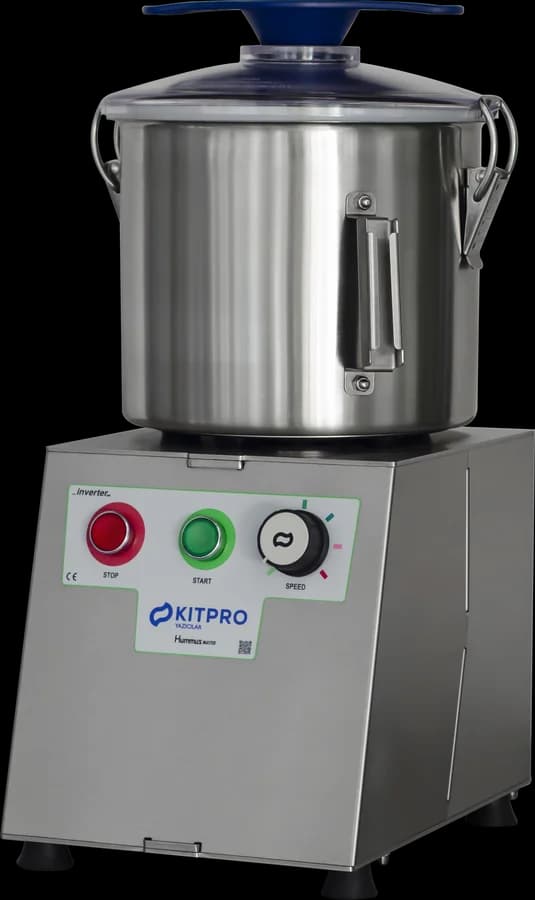
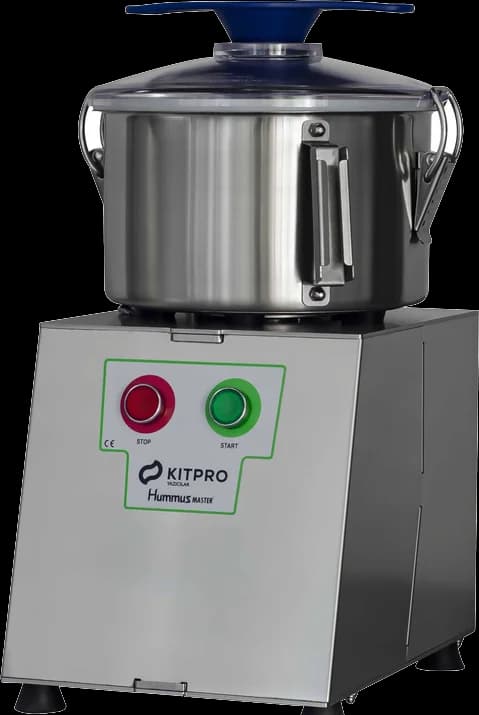
6, 9 and 12 litre bowls, 600-3,000 rpm inverter speed control and 230 V single phase. For preparing the day's mix in a few batches before service.
20-30 L Series
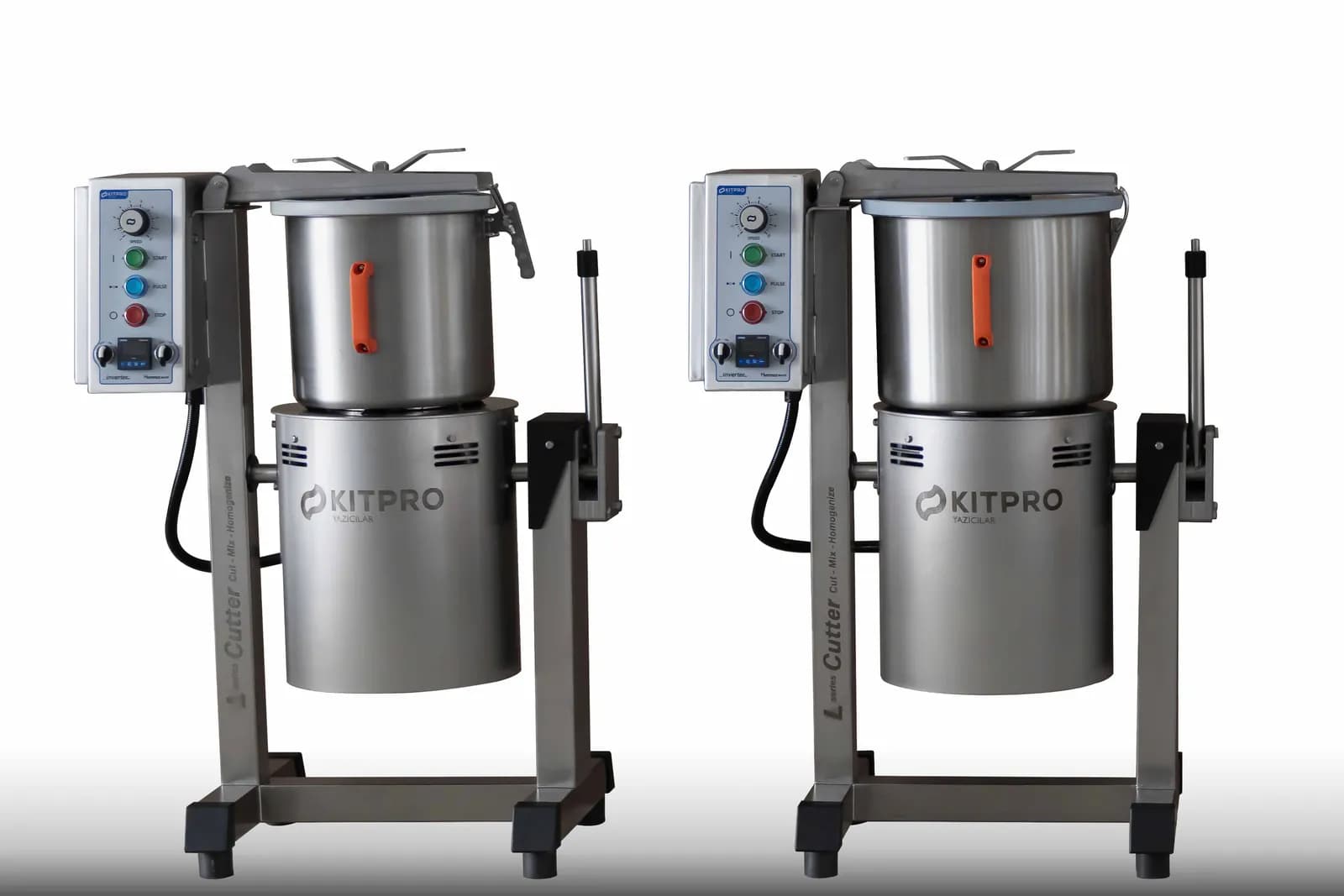
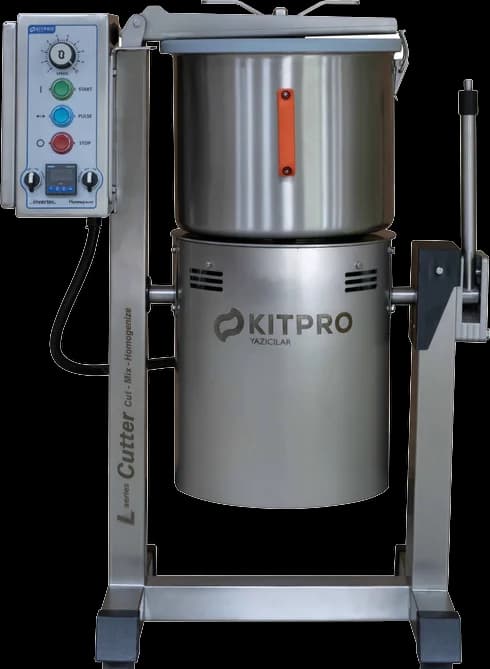
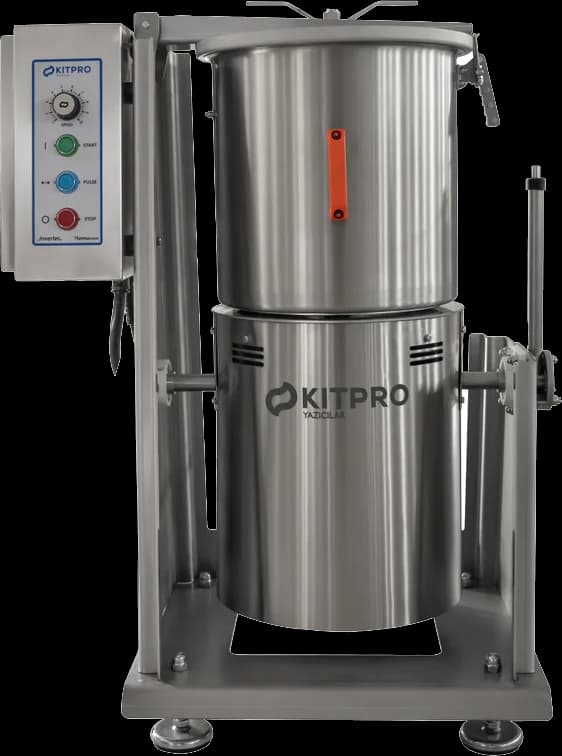
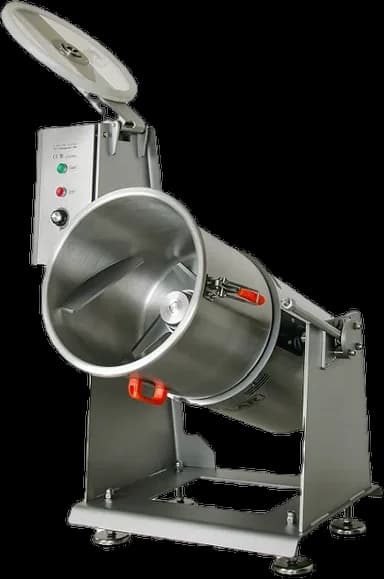
Floor-standing L20IV and L30IV with variable speed, pulse and a tilting bowl. For producers of packed raw mix or wholesale falafel.
L120IV
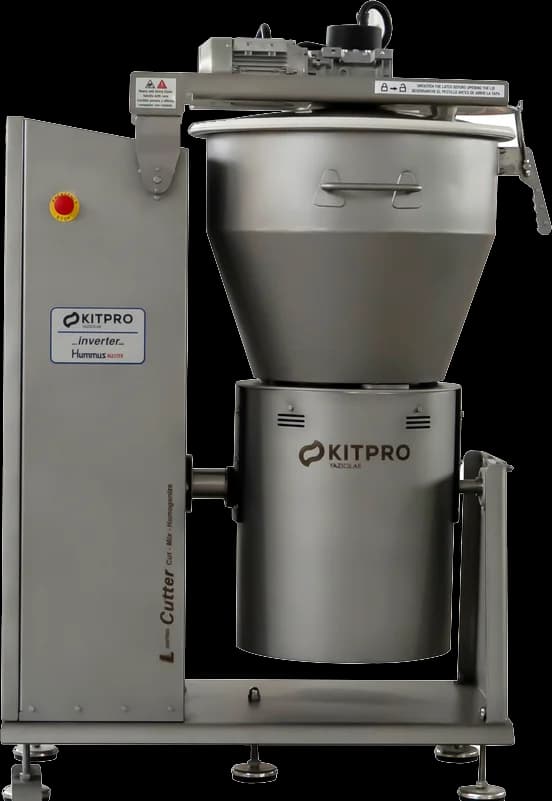
120 litre bowl, 15 kW motor, LED touchscreen, motorised lid and bowl tilting, direct Euro-bin unloading. For factories feeding frozen falafel and forming lines.
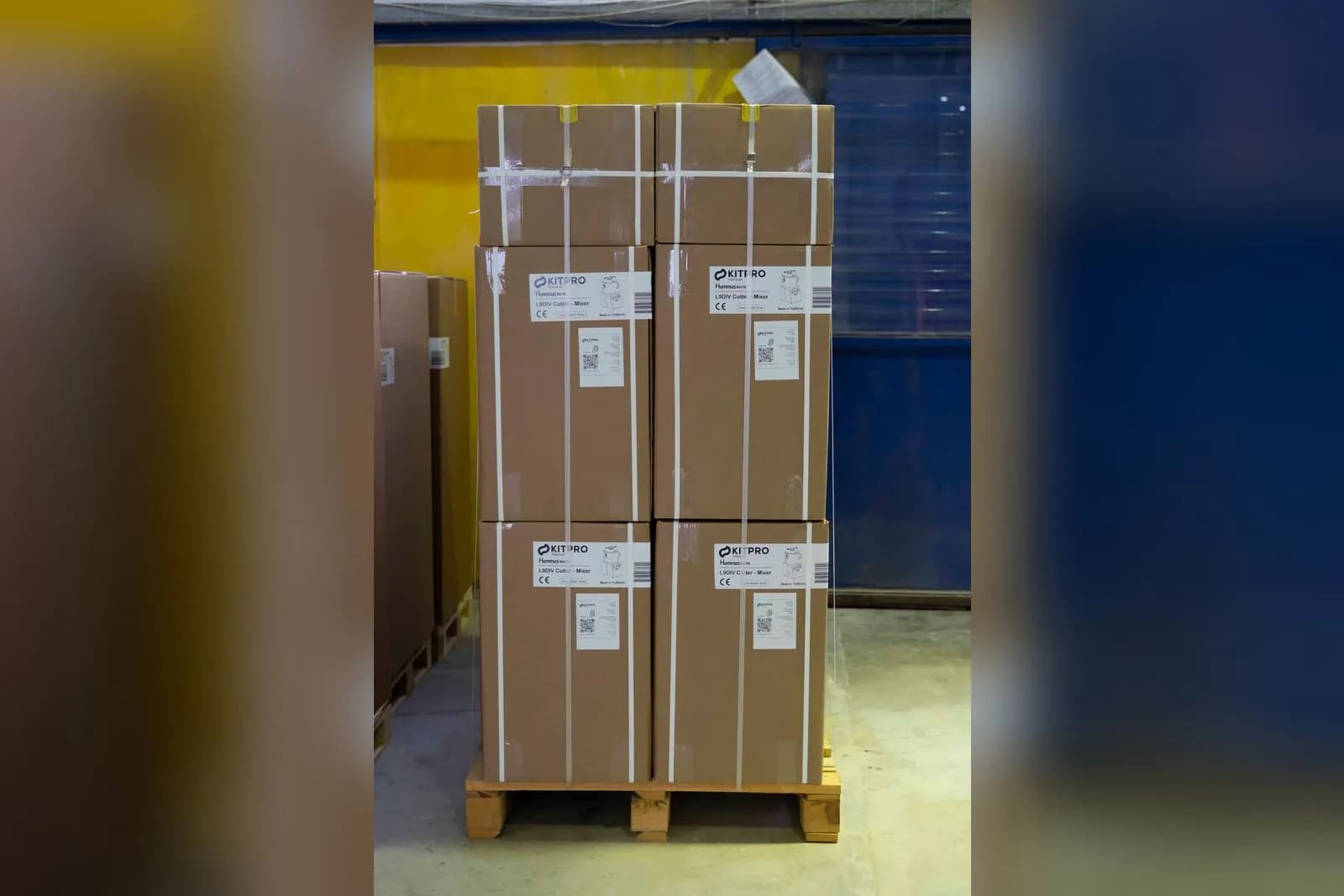
Texture in falafel mix: not too fine, not too coarse
Falafel is the street food of the Middle East and North Africa; in the Levant it is made with chickpeas, in Egypt mostly with fava beans. In both styles the raw material is not cooked, only soaked in water. The starch in the raw, soaked grain binds during frying and holds the ball together; cooked chickpeas cannot do this and the mix falls apart in the oil.
The texture of the mix decides the inside of the falafel. If the grains stay too coarse the ball does not bind and breaks up in the fryer; if the chickpeas are processed into a paste the falafel turns heavy, doughy inside and absorbs more oil. The aim is a mix that holds together when squeezed in the hand and looks like coarse couscous or coarse semolina. On a cutter mixer this texture is set by speed and time: short runs at low to medium speed, with pulse where needed.
Temperature control: keep the mix cold
Soaked chickpeas are a raw product, and the mix is kept cold once it is made. The main thing that warms the mix is friction in the bowl: a mix that spins at high speed for a long time heats up, turns sticky and the herbs lose their colour. This is why the right method for falafel is to reach the target grain with short runs rather than a long, high-speed cut.
In hot climates, keeping the soaking water cold, moving the finished mix straight to the cold room and, in large production, preparing the mix in batches rather than all at once keeps its temperature under control. A product that needs no heating does not need a jacketed bowl; standard cutter mixers are enough.
Herbs, spices and colour
The green inside of a falafel comes from parsley and coriander. When the herbs go into the bowl with the chickpeas they are cut to the same grain and spread evenly through the mix; chopped separately and added later, they can form clumps. Onion and garlic are processed in the same step.
Spices such as cumin, coriander seed and salt, and baking soda if used, are mixed in for a short time at low speed in the last step. The aim here is to spread, not to cut; the grain size is kept and every ball has the same flavour.
Industrial falafel: forming, freezing and the cold chain
In wholesale and export production, falafel is usually sold in one of two forms: formed, par-fried and frozen balls, or packed raw mix. In both cases the mix has to come out with the same grain and the same moisture from batch to batch, so that the forming machine can keep the weight constant.
The L120IV feeds these lines with its 120 litre bowl, LED touchscreen and motorised lid and bowl tilting; the mix is unloaded straight into a Euro-bin. At mid-scale, the tilting bowl of the 20-30 L Series does the same job in smaller batches.
Falafel machines by scale
Recommended KITPRO series for falafel mix and their main technical values:
| Scale | Machine | Bowl | Motor and power supply | Key feature |
|---|---|---|---|---|
| Restaurant, kiosk | DIV Series (L6DIV · L9DIV · L12DIV) | 6 / 9 / 12 L | 0.75 - 1.5 kW · 230 V 1Ph | Inverter speed control, countertop |
| Mid-scale | L20IV · L30IV | 20 / 30 L | 2.2 kW · 230 V 1Ph / 5.5 kW · 400 V 3Ph | Pulse, tilting bowl |
| Industrial | L120IV | 120 L | 15 kW · 400 V 3Ph | Motorised tilting, Euro-bin unloading |
Falafel output per batch and per hour depends on the soaking ratio of the chickpeas, the amount of herbs and the target grain. The kg/hour figures on the product pages are given for hummus. Contact us for a capacity calculation with your own recipe.
Falafel production
Examples of falafel mix prepared on KITPRO machines.
The right machines for Falafel Production
The KITPRO models most often chosen for this application area.
Questions about Falafel Production
Which machine is used for falafel mix?
For restaurants and kiosks, the 6-12 litre DIV countertop series; for packed mix or wholesale production, the 20-30 litre floor-standing series; at factory scale, the 120 litre L120IV. On all three, speed control cuts the chickpeas to the grain you want and mixes them with herbs and spices in the same bowl.
Are chickpeas cooked for falafel?
No. Dried chickpeas or fava beans are soaked overnight in cold water, drained and processed raw. The starch in the raw grain binds during frying and holds the ball together; a mix made with cooked chickpeas falls apart in hot oil.
How fine should falafel mix be?
The aim is a mix that looks like coarse couscous or coarse semolina and holds together when squeezed in the hand. A mix that is too coarse falls apart in the fryer, while one processed into a paste is heavy and absorbs oil. On a cutter mixer this texture is set with short runs at low to medium speed.
How do you stop falafel mix from warming up?
The main cause is the mix spinning in the bowl at high speed for a long time. Reaching the target grain with short runs, keeping the soaking water cold and storing the finished mix in the cold without delay keeps its temperature under control.
Can the same machine also make hummus?
Yes. The DIV, the 20-30 L Series and the L120IV are also used for hummus, spreads and sauces. Falafel needs short runs at low to medium speed, while hummus needs a long run at high speed; the difference is made with the speed setting. Clean the bowl and blade when switching products.
What else do you produce?
Let's find the right machine for your production
Answer two questions to find your match, or request a quote directly. Our engineering team replies within 24 hours.